
Finding the right baby bottle was much harder than I expected.
When my baby started struggling with reflux, gas, and colic-like discomfort, I quickly realized that not every bottle works the same. Some bottles made feeding too fast. Some were difficult to clean. Some had too many small parts. And some seemed to make my baby swallow more air, which made him uncomfortable after feeds.
After trying different options and reading many parent reviews, I decided to try the Philips Avent Natural Glass Baby Bottles. They were more expensive than regular plastic bottles, so I was unsure at first. But after using them for months, I can honestly say they became one of the best baby purchases I made.
This review is based on my personal experience as a parent, especially with a baby who had reflux and feeding discomfort.
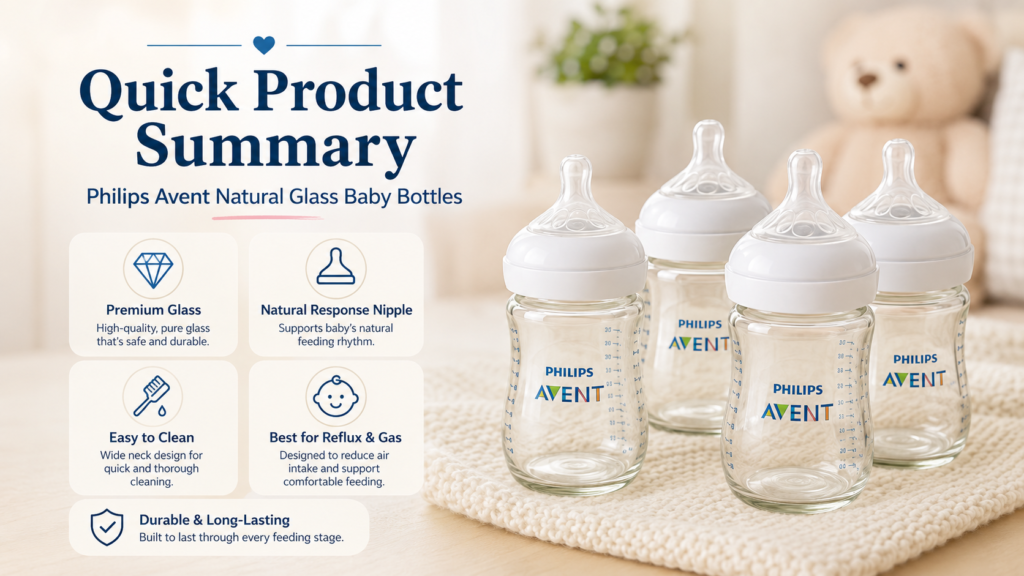
Quick Product Summary
| Feature | Details |
| Product Name | Philips Avent Natural Glass Baby Bottles |
| Material | Glass |
| Bottle Type | Wide-neck baby bottle |
| Best For | Breastfed babies, combination feeding, gas, reflux, and colic-prone babies |
| Main Benefit | Easy cleaning, natural feeding rhythm, and durable glass quality |
| Nipple Type | Natural Response nipple |
| Biggest Downside | Heavier and more expensive than plastic bottles |
| Overall Rating | 4.7/5 |
Why I Chose Philips Avent Glass Bottles
I wanted a bottle that felt safe, durable, and easy to clean.
At first, I used plastic bottles. They worked for a short time, but I was not fully satisfied. Some started looking worn out quickly, and I did not like how plastic bottles can sometimes hold smells or stains over time.
I also wanted something simple. As a parent, cleaning bottles again and again becomes part of daily life. I did not want a bottle system with too many small parts.
The Philips Avent Natural Glass Bottles stood out because they had:
- A glass body
- A wide-neck design
- Fewer parts
- Replaceable nipples
- A natural feeding-style nipple
- A design that may help reduce air intake during feeding
Since my baby was dealing with reflux and gas, these features were important to me.
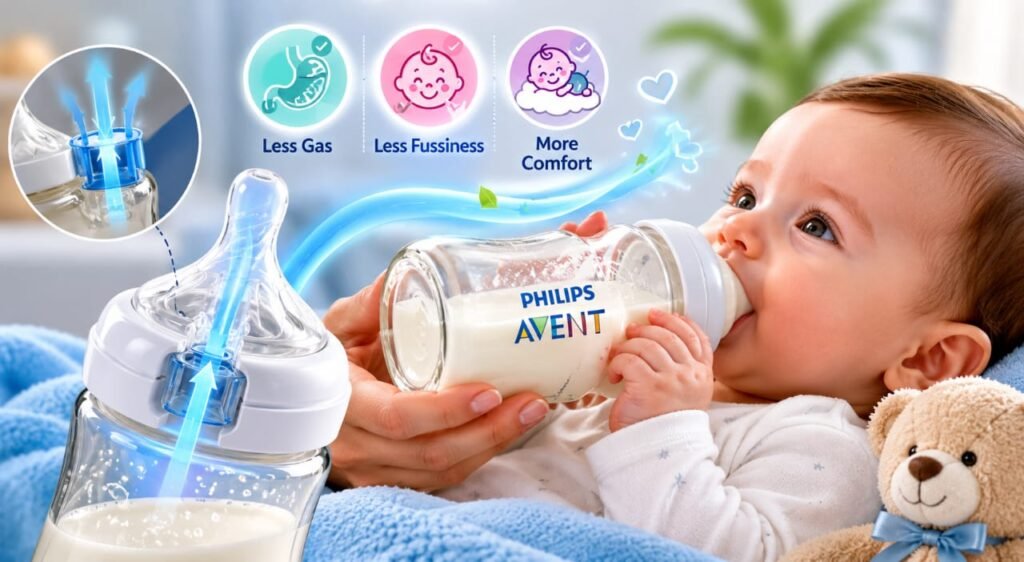
What Comes in the Box?
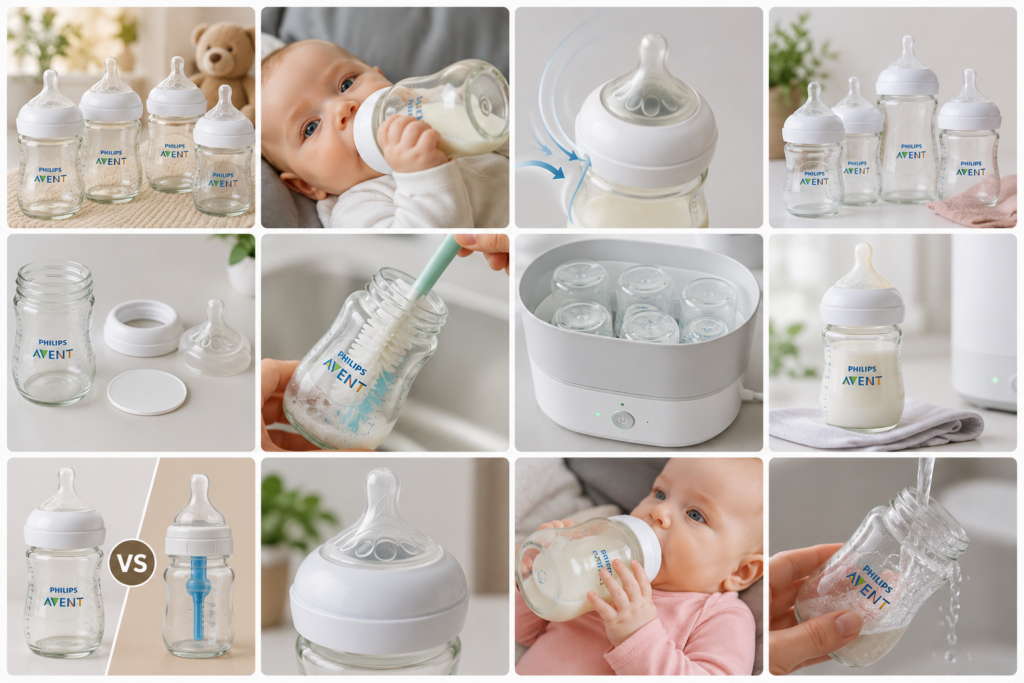
The exact items can depend on the pack you buy, but the Philips Avent Natural Glass Baby Bottles set usually includes:
| Item | Purpose |
| Glass bottles | For daily milk feeding |
| Natural Response nipples | Help baby drink at a more natural pace |
| Screw rings | Hold the nipple in place |
| Bottle caps | Keep nipples covered and clean |
| Sealing parts | Useful for storage, depending on the set |
Before buying, it is always a good idea to check the product listing carefully because bottle size, nipple flow, and included accessories may vary by pack.
First Impression and Build Quality
The first thing I noticed was the quality.
These bottles feel premium as soon as you hold them. The glass is thick, smooth, and sturdy. Compared with the plastic bottles I used before, Philips Avent glass bottles felt much stronger and cleaner.
They do feel heavier than plastic bottles, which is normal because they are made of glass. For newborns and young babies, this is usually not a big issue because parents hold the bottle during feeding. But if your baby is older and likes to hold the bottle alone, the extra weight is something to consider.
What I liked most was that the bottles did not feel cheap or weak. They felt strong enough for daily use, but of course, they still need careful handling because they are glass.
Another big benefit is that the nipples are replaceable. As your baby grows, you do not need to buy a completely new bottle system. You can simply change the nipple flow level according to your baby’s feeding needs.
Feeding Experience With My Reflux Baby
The main reason I kept using these bottles was the feeding experience.
My baby had reflux from the beginning. Feeding sessions were often stressful because he would become uncomfortable, swallow air, or get fussy after drinking.
I knew a bottle alone could not cure reflux. Reflux can have different causes, and severe symptoms should always be discussed with a pediatrician. But I was hoping for a bottle that could make feeding calmer and reduce extra air swallowing.
After switching to Philips Avent Natural Glass Bottles, I noticed that feeds became smoother.
My baby seemed more comfortable while drinking. He did not gulp milk too quickly, and the wide nipple shape helped him latch better. The feeding pace felt more controlled, and he seemed less uncomfortable after feeds.
For us, these bottles did not magically solve every feeding issue, but they made a real difference in our daily routine.
Natural Response Nipples: What Makes Them Different?
One of the best features of this bottle is the Natural Response nipple.
Unlike some bottles where milk flows too easily, this nipple is designed to release milk when the baby actively drinks. This helps the baby control the pace better.
For breastfeeding parents, this can be helpful because the feeding rhythm feels closer to breastfeeding. If you are combining breastfeeding and bottle feeding, this type of nipple may make the transition easier for some babies.
In my experience, my baby accepted the nipple well and seemed comfortable with it.
Nipple Flow Guide
Choosing the right nipple flow is very important. A flow that is too fast may cause coughing, choking, or gulping. A flow that is too slow may make the baby frustrated.
Here is a simple guide:
| Nipple Flow | Best For |
| Flow 1 | Newborns or very slow feeders |
| Flow 2 | Young babies who need a gentle flow |
| Flow 3 | Babies who need a slightly faster flow |
| Higher Flow | Older babies or babies who are ready for faster feeding |
In our case, we moved to Level 3 when my baby was around one month old, and it continued to work well for us even at four months. But every baby is different.
The best nipple flow is the one that allows your baby to drink calmly without coughing, choking, gulping too fast, or becoming frustrated.
Easy to Clean and Sterilize
Cleaning is one of the biggest reasons I liked these bottles.
The wide-neck opening makes them easy to wash by hand. There are not too many tiny parts to clean, which saves time.
This was a big benefit for me, especially during the newborn months when bottle washing feels endless.
The glass also does not hold smells or stains the way some plastic bottles can. Even after regular use, the bottles still looked clean and fresh.
They are also easy to sterilize. I used them with normal sterilizing methods, and they handled regular washing and sterilizing well.
Philips Avent Glass Bottles vs. Dr. Brown’s Bottles
Before switching to Philips Avent, I also tried Dr. Brown’s bottles.
Dr. Brown’s bottles are popular, and many parents like them, especially for gas and colic. They worked reasonably well for us, but I personally preferred Philips Avent for daily use because they felt simpler and easier to clean.
| Feature | Philips Avent Glass Bottles | Dr. Brown’s Bottles |
| Cleaning | Easier because of fewer parts | More parts to wash |
| Bottle Opening | Wide neck | Smaller opening in many models |
| Feeding Style | Natural Response nipple | Anti-colic vent system |
| Material Feel | Premium glass feel | Depends on plastic or glass version |
| Best For | Simple daily use, breastfeeding support, easy cleaning | Parents who prefer a detailed anti-colic system |
| Main Downside | Heavier because of glass | Extra parts can take more time to clean |
Both brands can work well. But for my family, Philips Avent was the better fit because it was simple, durable, and easier to maintain.
Pros and Cons
| Pros | Cons |
| High-quality glass construction | More expensive than plastic bottles |
| Durable and long-lasting | Heavier than plastic bottles |
| Easy to clean and sterilize | Glass needs careful handling |
| Wide-neck design | Not ideal if you want very lightweight travel bottles |
| Natural Response nipple supports controlled feeding | Some babies may need a different nipple flow |
| Does not hold smells or stains easily | Can break if dropped hard |
| Replacement nipples are available | Upfront cost is higher |
Who Should Buy These Bottles?
Philips Avent Natural Glass Bottles are a good choice for parents who want a premium, simple, and durable bottle system.
They are especially suitable for:
- Breastfed babies transitioning to bottle feeding
- Parents doing combination feeding
- Babies who struggle with gas or reflux discomfort
- Parents who prefer glass over plastic
- Families who want bottles that are easy to clean
- Parents looking for long-term bottle quality
- Parents who do not want too many small cleaning parts
Who Should Avoid These Bottles?
These bottles may not be the best choice for every family.
You may want to avoid them if:
- You want the cheapest bottle option
- You need very lightweight bottles for travel
- Your baby already holds the bottle independently
- You are worried about handling glass bottles
- You prefer bottles with a more complex anti-colic system
- You do not want to buy separate nipple flow levels later
Safety and Care Tips
Because these bottles are made of glass, proper care is important.
Here are a few tips:
- Check the bottle before every use.
- Do not use the bottle if you see cracks, chips, or damage.
- Avoid sudden extreme temperature changes.
- Be careful when warming milk.
- Always test milk temperature before feeding.
- Do not let older babies throw or drop the bottle.
- Replace nipples when they show signs of wear.
- Follow the brand’s cleaning and sterilizing instructions.
These small habits can help keep the bottles safe and long-lasting.
Are Philips Avent Glass Bottles Worth the Price?
For me, yes.
At first, I was not excited about spending more money on baby bottles. But after using them for months, I felt the quality justified the price.
They felt cleaner, stronger, and more durable than the plastic bottles I used before. They were easy to clean, simple to assemble, and comfortable for my baby.
Most importantly, they helped make feeding less stressful for us.
If you are only looking for a basic budget bottle, there are cheaper options available. But if you want a premium glass bottle that supports a natural feeding rhythm and can last longer, Philips Avent Natural Glass Bottles are worth considering.
Final Rating Breakdown
| Category | Rating |
| Build Quality | 5/5 |
| Cleaning Ease | 5/5 |
| Feeding Comfort | 4.5/5 |
| Value for Money | 4.5/5 |
| Durability | 5/5 |
| Travel Friendliness | 3.5/5 |
| Overall Rating | 4.7/5 |
Final Verdict
The Philips Avent Natural Glass Baby Bottles became one of my favorite baby purchases.
They are strong, easy to clean, and thoughtfully designed for babies who need a calmer feeding experience. The Natural Response nipples helped my baby drink at a more comfortable pace, and the wide-neck design made daily cleaning much easier.
They are more expensive and heavier than plastic bottles, so they may not be perfect for every family. But for parents who want a high-quality glass bottle, especially for combination feeding or babies with gas and reflux discomfort, they are definitely worth considering.
Based on my personal experience, I would recommend Philips Avent Natural Glass Bottles to parents who want a safer-feeling, long-lasting, and easy-to-use bottle system.
They did not solve every feeding problem, but they made feeding easier, cleaner, and less stressful for us. During the newborn months, that kind of difference really matters.