25 min readUpdated November 1, 2026
What this guide covers
- Quick Answer: Is a Wearable Breast Pump Better Than a Traditional Electric Pump?
- 1. Wearable vs Electric Breast Pump: The Differences That Actually Matter
- 2. What Is a Wearable Breast Pump?
- 3. What Is a Traditional Electric Breast Pump?
- 4. Which Pump Removes More Milk?
- Why Does a Wearable Pump Sometimes Collect Less Milk?
- 3. Can a Wearable Breast Pump Reduce Your Milk Supply?
- 4. Why Does One Breast Produce Less Milk With a Wearable Pump?
- 5. Are Wearable Pumps Good for Exclusive Pumping?
- 6. Wearable vs Electric Breast Pump for Working Moms
- Does Stronger Suction Mean More Breast Milk?
- 7. Comfort: Which Pump Feels Better?
- Can You Pump While Walking, Cooking, or Driving?
- Why Does My Wearable Breast Pump Leak Even When It Isn’t Full?
- Wearable vs Traditional Electric Pump for Exclusive Pumping
- 8. Seven Common Breast Pump Buying Mistakes
- Why a Wearable Pump May Feel Comfortable at First but Hurt Later
- Are Wearable Breast Pumps More Difficult to Clean?
- Does Milk Stay Safe Inside a Wearable Collection Cup?
- The Hidden Costs Most Breast Pump Comparisons Ignore
- Can You Buy a Secondhand Breast Pump to Save Money?
- How to Choose the Right Pump for Your Lifestyle
- 9. Which Breast Pump Is Easier to Clean?
- 10. The Hidden Cost of a Breast Pump: Calculate the Whole Year
- 11. Five Less-Obvious Tips Before Buying Either Pump
- 12. Can You Use Both a Wearable and Traditional Electric Pump?
- 13. Which Breast Pump Should You Choose? Real-Life Scenarios
- 14. Frequently Asked Questions
- Final Verdict: Wearable vs Electric Breast Pump
- Trusted references
A practical 2026 guide for mothers choosing between hands-free wearable pumps and traditional electric breast pumps.
Buying a breast pump can feel surprisingly confusing.
You see one mother using a tiny wearable pump while working on her laptop. Another says her traditional electric pump collects more milk in less time. Then you read a review claiming that wearable pumps are not good for maintaining milk supply.
Who should you believe?
The answer is more complicated than most product comparisons suggest.
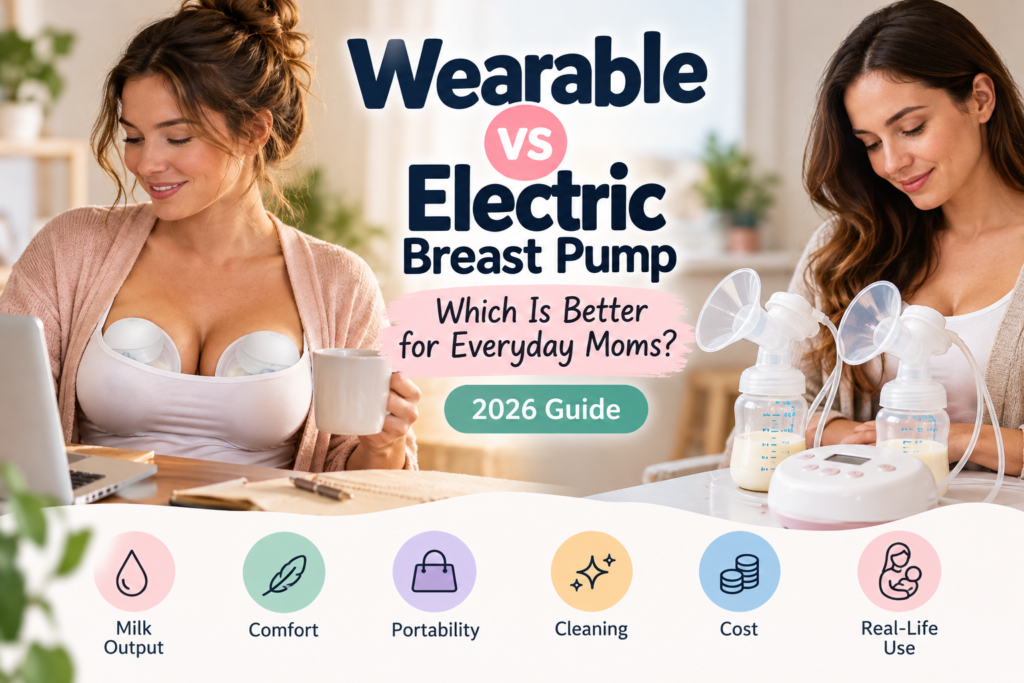
A wearable breast pump is already an electric breast pump. The meaningful comparison is between a wearable electric pump that fits inside your bra and a traditional electric pump that usually has an external motor, breast shields, and collection bottles.
Both can express breast milk. Both can be used regularly. And both can be disappointing if they don’t fit your body or your routine.
The biggest mistake is assuming that a more expensive, powerful, or convenient pump must also be more effective.
What matters is how well the pump removes milk for you, how comfortable it feels, how easy it is to clean, and whether you can realistically use it as often as needed.
This guide looks beyond basic product features. We’ll explore the questions mothers often have after purchasing a pump, including uneven milk output, pumping while moving, suction settings, flange sizing, leaking cups, cleaning time, and the hidden costs of replacement parts.
Quick Answer: Is a Wearable Breast Pump Better Than a Traditional Electric Pump?
A wearable breast pump is often better for convenience and mobility, while a traditional electric pump may offer a more stable setup, greater accessory compatibility, and easier troubleshooting. Neither type is guaranteed to produce more milk.
If you pump occasionally while working or caring for another child, a wearable may suit your lifestyle.
If you pump frequently, are establishing your milk supply, or need dependable milk removal, pay particular attention to pump fit, performance, and access to professional lactation support rather than choosing based on portability alone.
1. Wearable vs Electric Breast Pump: The Differences That Actually Matter
| Feature | Wearable breast pump | Traditional electric breast pump |
|---|---|---|
| Design | Fits inside a pumping bra | External motor with collection kit |
| Portability | Usually very portable | Depends on model |
| Hands-free use | Usually yes | Possible with a pumping bra |
| Suction adjustment | Varies by model | Often offers multiple settings |
| Milk removal | Depends on fit and response | Depends on fit and response |
| Cleaning | Multiple small components | Flanges, valves, bottles, tubing as applicable |
| Noise | Varies; not always silent | Varies by model |
| Best suited for | Mobility and flexible routines | Regular pumping and greater setup flexibility |
| Main limitation | Positioning, capacity, and fit can be challenging | Less discreet and sometimes less portable |
Important: A wearable pump is not necessarily weaker, and a traditional pump is not guaranteed to remove more milk. Individual fit and performance matter more than the product category alone.
2. What Is a Wearable Breast Pump?
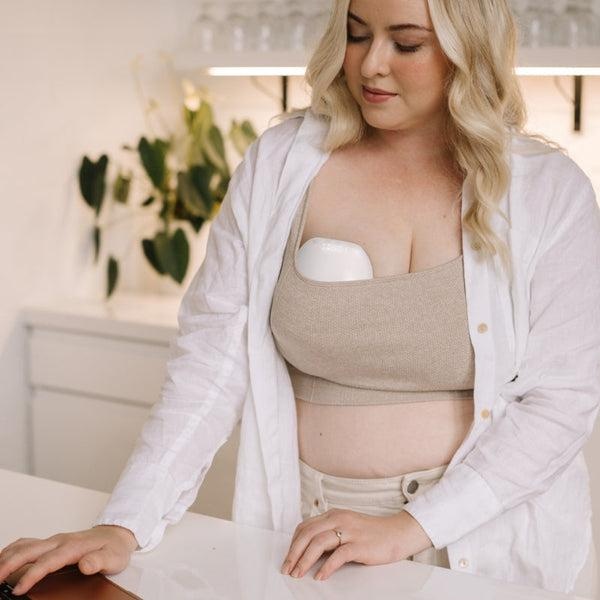
A wearable breast pump is a compact pumping system designed to sit inside a supportive bra. Most models combine a motor, breast shield, and milk collection container into a relatively small unit.
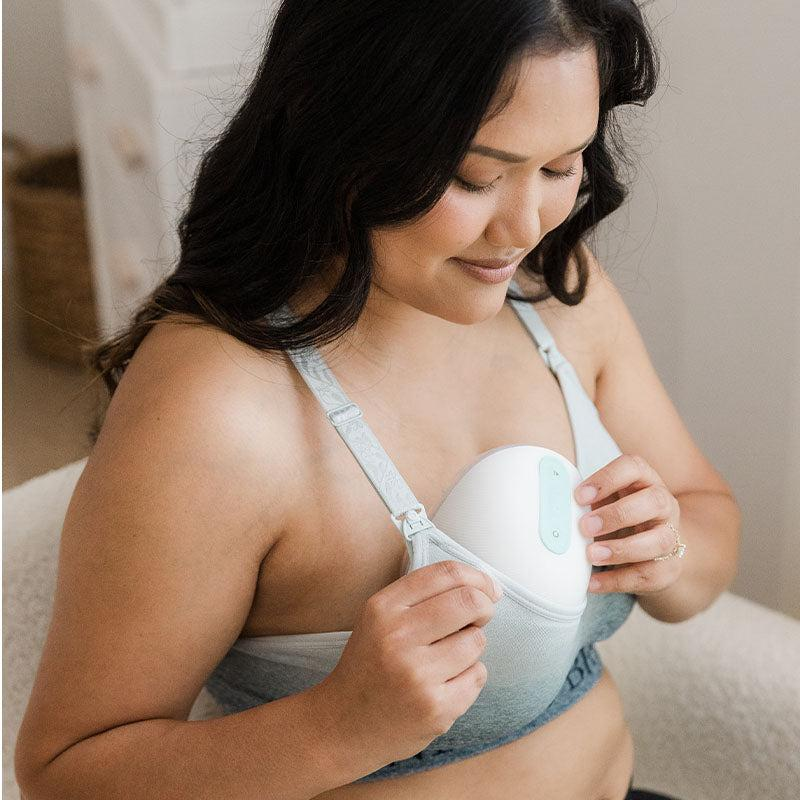
Some wearable systems have a separate motor connected to in-bra collection cups. Others are fully self-contained.
Why mothers choose wearable pumps
The biggest advantage is flexibility. You may be able to pump while sitting at your desk, preparing a simple meal, or doing light activities around the house.
This can be especially helpful for mothers who find it difficult to sit beside a conventional pump several times a day.
However, wearable doesn’t mean completely unrestricted movement.
Bending forward, lifting heavy objects, or changing position suddenly can affect cup alignment or cause leakage with some designs. Follow the manufacturer’s guidance about movement and positioning.
A practical tip most comparisons overlook
Before buying a wearable pump, consider your everyday clothing.
Some wearable cups create a noticeable shape under fitted clothes. A pump advertised as discreet may still be visible under a thin shirt.
If privacy matters at work, look at the cup’s actual dimensions, not just marketing photographs.
3. What Is a Traditional Electric Breast Pump?
A traditional electric breast pump uses a powered motor to create suction through a breast shield, also called a flange.
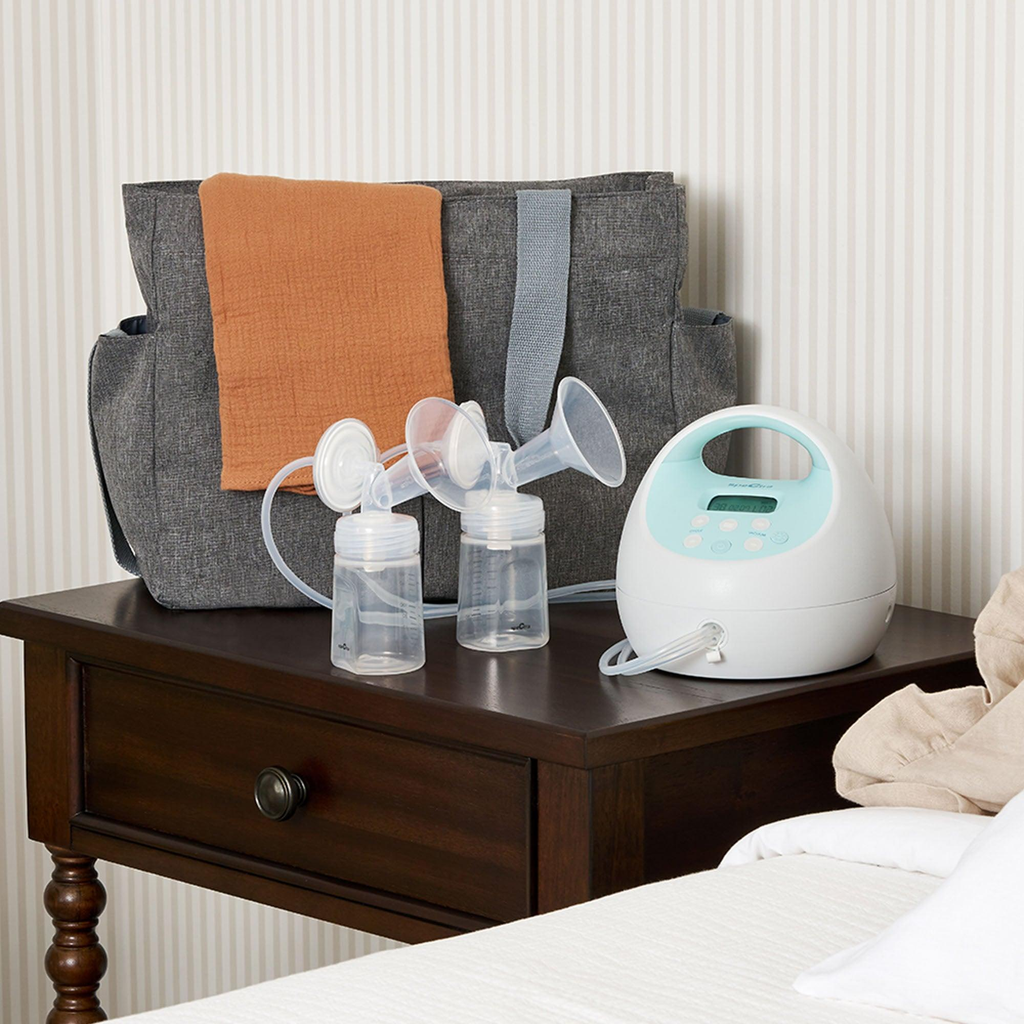
Milk is collected in a bottle or compatible container. Depending on the design, the motor may be plugged into an outlet or powered by a rechargeable battery.
Traditional electric pumps come in single and double-pumping versions.
A double electric pump allows milk expression from both breasts at the same time. This may save time compared with pumping each breast separately.
Why traditional pumps remain popular
Many models offer:
- Adjustable suction and pumping rhythms.
- Multiple flange sizes or compatible inserts.
- Replacement parts that are relatively easy to find.
- Compatibility with pumping bras for hands-free use.
- A stable setup for repeated daily sessions.
Some mothers find that a traditional electric pump provides more consistent milk removal than their wearable model. Others get comparable results from both.
The difference often comes down to fit, pump design, and individual milk ejection response.
4. Which Pump Removes More Milk?
This is probably the most important question, particularly if you plan to pump several times every day.
There is no universal winner.
A pump’s advertised suction strength does not tell you how much milk it will remove from your breasts.
Milk expression depends on several factors:
Flange fit: A flange that is too large or too small may cause discomfort and interfere with effective pumping.
Milk ejection reflex: Some mothers respond better to one pumping pattern than another.
Pump settings: The highest suction setting is not necessarily the most effective or comfortable.
Pumping frequency: Milk production is strongly influenced by how frequently and effectively milk is removed.
Pump condition: Worn valves, damaged membranes, and poor seals can reduce performance.
Unique tip: Compare pumping patterns, not just bottle volumes
If you’re testing two pumps, don’t judge them using only one session.
Milk output can change throughout the day and from one session to another.
Instead, compare each pump over several similar sessions while keeping timing, feeding circumstances, and session length reasonably consistent.
Record comfort, leakage, how well the breast softens, and the amount collected.
Remember that pumped volume alone is not a reliable measurement of your total milk supply.
If you’re concerned about milk production or your baby’s intake, a lactation professional can help assess feeding and milk transfer.
Why Does a Wearable Pump Sometimes Collect Less Milk?
Imagine you normally collect 120 mL during a session with your traditional pump. After switching to a wearable model, you collect only 75 mL.
Does that mean the wearable pump is weaker?
Not necessarily.
There are several possible explanations.
The breast shield may not fit correctly
A wearable pump must sit securely against the breast inside a bra.
If the cup shifts, the nipple may no longer remain centered in the flange tunnel. This can affect comfort, suction, and milk removal.
Unlike many traditional pumps, where the breast shield is clearly visible, wearable cups can make positioning harder to monitor.
Your bra may be too tight or too loose
A tight bra may press the cup uncomfortably against breast tissue.
A loose bra may allow the cup to shift and lose its seal.
The goal is firm, comfortable support without excessive compression.
Your body may respond differently to the pumping pattern
Milk release depends partly on the milk ejection reflex, commonly called let-down.
Different pumps use different suction rhythms, stimulation modes, and cycle patterns.
A mother may respond quickly to one pump but need more time with another.
The collection system may not be assembled correctly
A slightly misplaced silicone seal, valve, or membrane may reduce suction.
This is particularly worth checking when the pump suddenly performs differently after cleaning.
A useful troubleshooting method
Instead of immediately increasing suction, check these four things:
- Is the nipple centered in the flange?
- Is the bra holding the pump comfortably in place?
- Are all seals and valves correctly installed and undamaged?
- Does the pump’s stimulation pattern feel different from the one you’re accustomed to?
If the problem continues, compare performance over several similar pumping sessions and consult a lactation professional.
Remember: One low-output session doesn’t prove that a pump is ineffective or that your milk supply has decreased.
3. Can a Wearable Breast Pump Reduce Your Milk Supply?
A wearable pump does not automatically reduce breast milk supply.
The more important question is whether milk is being removed frequently and effectively enough to support your baby’s feeding needs.
Milk production responds to milk removal. If a new pump consistently removes less milk, or if the convenience of a wearable leads to shorter or missed sessions, supply may be affected over time.
But there is another side to this.
For a mother who previously skipped sessions because she couldn’t sit beside a pump, a wearable model may make regular pumping more manageable.
In that situation, convenience could support a more consistent routine.
What matters more than pump type?
- How frequently milk is removed.
- Whether pumping is comfortable and effective.
- Whether feeding or pumping sessions are being missed.
- Whether your baby is receiving enough milk.
- Whether there are underlying feeding or lactation difficulties.
For a baby who is primarily breastfed, pump output alone cannot tell you how much milk the baby receives during nursing.
If you notice a sustained reduction in expressed milk, or your baby has fewer wet diapers, poor weight gain, or feeding difficulties, contact your pediatrician or lactation consultant.
4. Why Does One Breast Produce Less Milk With a Wearable Pump?
This is an especially frustrating situation.
You place two wearable cups in your bra, start both motors, and finish the session with noticeably different amounts of milk.
Before blaming the pump, understand that breasts do not always produce equal amounts of milk.
Natural differences in milk production, storage capacity, and milk ejection can contribute to unequal output.
However, pump-related problems may also play a role.
Possible causes
Different nipple sizes: Your left and right nipples may require different flange sizes.
Uneven positioning: One wearable cup may sit at a slightly different angle.
Bra pressure: Clothing may compress one side more than the other.
Component problems: One cup may have a worn valve or imperfect seal.
Normal biological variation: One breast may naturally produce more milk.
The cup-swapping test
If one side consistently performs poorly, and the manufacturer allows the components to be interchanged, try switching the pump units between sides during a later comparable session.
If the low output appears to follow the same pump unit, inspect that unit for assembly or mechanical problems.
If the same breast continues producing less, individual breast response or fit may be contributing.
This is a troubleshooting clue, not a medical diagnostic test.
Do not ignore sudden one-sided pain, redness, swelling, fever, or a persistent lump. These symptoms deserve prompt medical advice.
5. Are Wearable Pumps Good for Exclusive Pumping?
Exclusive pumping means expressing breast milk to feed your baby rather than relying on direct breastfeeding.
For exclusive pumpers, reliability and comfort become especially important because pumping is part of the daily feeding routine.
A wearable pump can be useful, but there are a few questions worth asking before making it your only pump.
Can you maintain your usual milk removal?
If your wearable consistently removes less milk than another properly fitted pump, that may matter when you depend on pumping to maintain your supply.
Can you replace the parts easily?
Frequent pumping places more wear on valves, membranes, and other components.
A pump that works well but has difficult-to-find replacement parts may become inconvenient over time.
Is the pump comfortable during repeated sessions?
A pump that feels comfortable for occasional use may feel different when used multiple times a day.
A more flexible option
Some exclusive pumpers prefer using a traditional double electric pump for their main sessions and a wearable pump when they need mobility.
This isn’t a requirement, and many mothers successfully use wearable pumps as their primary pumps. The best approach depends on whether the pump works effectively for you.
If you are establishing supply, experiencing low output, or pumping for a premature or medically vulnerable baby, seek individualized guidance from your healthcare team before relying on a new pump.
6. Wearable vs Electric Breast Pump for Working Moms
Returning to work can change your pumping priorities.
At home, you might have time to prepare your equipment and sit comfortably. At work, you may need to manage meetings, privacy, milk storage, and cleaning.
A wearable pump can make certain parts of this routine easier, especially if you have limited space.
But convenience is only one part of the decision.
Consider your actual work environment
If you work at a desk, a wearable pump may be convenient, provided you can position it properly and store expressed milk safely.
If your job involves frequent bending, lifting, or physical activity, a wearable cup may shift or leak.
If you have a private pumping space and predictable breaks, a traditional electric pump may be just as practical.
Less-obvious tip: Check how easily you can pour milk out of the wearable collection cup. Some designs have narrow openings or awkward pouring angles. Spilling even a small amount can be frustrating, especially when every ounce matters to you.
Also, check the battery life. A pump that lasts for several sessions on paper may still need charging during a long workday, depending on your settings and usage.
Does Stronger Suction Mean More Breast Milk?
No. Stronger suction does not automatically mean more milk.
This is one of the most misleading assumptions in breast pump shopping.
Manufacturers sometimes advertise maximum suction in millimeters of mercury (mmHg). Although this number describes pressure, it doesn’t tell the whole story.
Two pumps with similar maximum suction ratings can feel and perform differently because of their pumping rhythms, flange design, and other mechanical characteristics.
More importantly, maximum suction may be uncomfortable.
What happens if suction is too high?
Excessive suction can cause nipple pain, swelling, irritation, or tissue injury.
Pain and discomfort can also make pumping more difficult.
A sensible approach is to start at a low setting and gradually adjust to a comfortable, effective level according to your pump’s instructions.
Practical buying tip: Instead of asking, “Which pump has the strongest suction?” ask, “Can I adjust the rhythm and suction independently, and does the pump offer a comfortable setting that works for me?”
That question is more useful than comparing maximum suction numbers alone.
7. Comfort: Which Pump Feels Better?
Comfort depends on more than whether a pump is wearable.
A traditional pump with a correctly fitted flange can be more comfortable than a poorly fitted wearable pump. The reverse can also be true.
Pumping should not cause persistent pain, nipple injury, or significant swelling.
Check these signs of poor fit
- Your nipple rubs painfully against the flange tunnel.
- Excessive areola tissue is pulled into the tunnel.
- You experience pinching or persistent discomfort.
- Your nipple becomes swollen, damaged, or discolored.
- Milk expression seems less effective than usual.
Nipple size can change during pregnancy and postpartum, so a flange size that worked previously may not remain ideal.
Unique tip: Measure for the actual pump you’re using
Do not assume that a flange insert fitting one pump will work equally well in another.
Different breast shield shapes, tunnel lengths, materials, and pumping mechanics can affect comfort.
Use the manufacturer’s fitting instructions and seek professional help if you’re unsure.
Increasing suction to compensate for a poor fit is not a good solution.
Can You Pump While Walking, Cooking, or Driving?
Wearable pumps are marketed around freedom of movement, but their practical limitations deserve attention.
Walking
Light walking may be possible with some models, provided the cups remain properly positioned.
However, fast walking or sudden movements may cause shifting or leakage.
Cooking
You may be able to prepare a simple meal while pumping, but avoid tasks involving heavy lifting, bending repeatedly, or activities that could interfere with pump positioning.
Keep electrical pump components away from excessive heat, steam, and water.
Driving
Being hands-free does not automatically make pumping while driving safe.
Adjusting cups, checking milk levels, handling tubing, or responding to leaks can distract you from the road.
The safer choice is to position and operate the pump while parked, and avoid manipulating it while driving. Follow the pump manufacturer’s safety instructions.
Sleeping
Wearable pumps should not be assumed safe for unattended operation during sleep.
A pump may shift, overfill, leak, or remain running longer than intended.
Use the device only as directed and stay alert during pumping.
An overlooked point
The biggest advantage of wearable pumping may not be the ability to walk around.
It may simply be the freedom to sit comfortably without holding collection bottles or remaining attached to a larger pumping setup.
For many mothers, that alone can make pumping less stressful.
Why Does My Wearable Breast Pump Leak Even When It Isn’t Full?
A leaking wearable pump doesn’t always mean the collection cup has reached capacity.
Possible reasons include:
- The cup isn’t fully assembled.
- A silicone seal is twisted or damaged.
- The pump tilts beyond the manufacturer’s recommended position.
- Milk enters an opening intended for pouring.
- The collection container is filled beyond its usable limit.
- Clothing pressure shifts the cup during pumping.
How to troubleshoot leaks
First, turn off the pump and remove it carefully.
Check the seals, collection cup, and valve. Reassemble the components according to the manual.
Next, test the fit while sitting upright.
If leaking happens only when you bend forward, the issue may be movement rather than a defective pump.
A detail worth checking before buying
Look at the collection cup’s usable fill line, not just its advertised capacity.
For example, a manufacturer may advertise a particular maximum volume, but the practical amount you can collect before needing to empty the cup may depend on positioning and usage instructions.
Also check how the cup must be held when removing it from your bra.
A pump that collects milk effectively but spills during removal can still be frustrating.
Wearable vs Traditional Electric Pump for Exclusive Pumping
Exclusive pumping means providing expressed breast milk rather than relying on direct nursing.
For these mothers, pumping is not an occasional convenience. It is an essential part of feeding their baby.
That changes the buying decision.
A pump used several times a day needs to be comfortable, reliable, easy to clean, and supported by readily available replacement parts.
When a wearable pump may work well
A wearable may be suitable if it consistently removes milk effectively, fits comfortably, and allows you to maintain the pumping routine recommended for your circumstances.
When a traditional pump may be preferable
A traditional double electric pump may be easier to troubleshoot and customize, particularly when establishing supply or dealing with milk removal difficulties.
Some mothers also prefer to see the breast shield during pumping so they can monitor nipple alignment.
What about using both?
A combination can be practical.
You might use a traditional pump during planned sessions at home and a wearable pump when you need greater mobility.
But there is no rule that every exclusive pumper needs two pumps.
Special consideration: If your baby was born prematurely, is medically vulnerable, or is unable to feed effectively at the breast, discuss your pumping plan and equipment with your neonatal or lactation team. A hospital-use pump may be recommended for specific situations.
8. Seven Common Breast Pump Buying Mistakes
Mistake 1: Choosing the highest advertised suction
Stronger suction doesn’t automatically mean better milk removal. Comfort and effective milk expression are more important than the maximum suction number.
Mistake 2: Assuming every wearable pump is quiet
Some models make audible motor sounds, especially in quiet rooms. Check independent demonstrations rather than relying only on advertising.
Mistake 3: Ignoring replacement-part costs
The purchase price is only one expense. Valves, membranes, flanges, inserts, and collection cups may need replacement according to manufacturer instructions or when worn.
Mistake 4: Overlooking collection capacity
If you usually express larger amounts of milk, a small collection cup may need emptying during a session.
Check the usable capacity and fill indicators, not simply the advertised maximum.
Mistake 5: Buying without checking cleaning requirements
Wearable pumps can have small seals and narrow spaces that require careful cleaning. Compare the number of parts that contact milk and how easily they can be disassembled.
Mistake 6: Assuming hands-free means you can do everything
Some movements can disturb cup alignment. Even with a wearable pump, you may need to limit activity.
Mistake 7: Buying based only on social media reviews
A pump that works beautifully for one mother may be uncomfortable or ineffective for another.
Look for reviews that discuss fit, cleaning, replacement parts, long-term reliability, and customer support—not just how the pump looks.
Why a Wearable Pump May Feel Comfortable at First but Hurt Later
Some mothers find that a pump feels comfortable during the first few minutes but becomes uncomfortable as the session continues.
Possible reasons include changing nipple movement, friction, swelling, excessive suction, or the cup shifting inside the bra.
This can be harder to notice with a wearable pump because the nipple is less visible during use.
What to check
Look for persistent rubbing, pinching, nipple discoloration, swelling, or discomfort that increases as pumping continues.
If pain develops, stop and check the fit rather than simply tolerating it.
Try a comfortable setting and review the flange sizing instructions.
Do not use nipple pain as a sign that a pump is working harder or removing more milk.
Persistent pain, cracks, bleeding, or other injuries warrant assessment by a qualified healthcare professional.
Are Wearable Breast Pumps More Difficult to Clean?
Not always. However, their compact design can make cleaning less straightforward.
Some wearable collection cups contain several silicone components and narrow channels. Traditional pumps may have larger parts but also require careful disassembly.
The most useful comparison is not the number of components alone.
It is whether you can easily reach, wash, rinse, dry, inspect, and reassemble every part that contacts milk.
What the CDC recommends
The CDC recommends thoroughly cleaning milk-contact pump components after every use. Daily sanitizing provides additional protection, particularly for babies younger than two months, babies born prematurely, or babies with weakened immune systems. CDC
The refrigerator shortcut: Is it safe?
You may have heard of placing used pump parts inside a sealed bag in the refrigerator between pumping sessions.
The CDC explains that refrigeration can slow bacterial growth but does not stop it. It also notes that evidence has not established this practice as a safe substitute for cleaning after every use.
Thorough cleaning after each session remains the recommended approach, especially for higher-risk infants. CDC
A better practical solution
If you regularly pump away from home, consider carrying a second clean, dry collection kit.
Keep used parts separate from clean equipment and wash them as soon as practical.
Also remember that breast pump motors and electrical components should never be submerged in water. Follow the manufacturer’s specific cleaning instructions. FDA
Does Milk Stay Safe Inside a Wearable Collection Cup?
A wearable collection cup is designed to collect expressed milk, but it should not automatically be treated as a long-term milk storage container.
After pumping, transfer milk into a suitable clean, food-grade storage container unless the manufacturer specifically provides appropriate storage instructions for the collection vessel.
The CDC recommends the following storage limits for freshly expressed breast milk intended for healthy, full-term infants:
| Storage location | Recommended limit |
|---|---|
| Room temperature, 77°F (25°C) or cooler | Up to 4 hours |
| Refrigerator, 40°F (4°C) | Up to 4 days |
| Freezer, 0°F (-18°C) or colder | About 6 months is best; up to 12 months acceptable |
These recommendations assume appropriate handling and storage. Premature or medically vulnerable babies may need different precautions. CDC
What if you’re pumping in a hot environment?
If you’re using a wearable pump while traveling in summer, do not assume that milk remains at a safe room temperature.
A hot car, direct sunlight, or a warm outdoor environment can make safe storage more difficult.
Transfer the milk promptly and use a refrigerator or an insulated cooler with frozen ice packs.
The CDC allows expressed milk to be transported in an insulated cooler with frozen ice packs for up to 24 hours under appropriate conditions. CDC
The Hidden Costs Most Breast Pump Comparisons Ignore
When shopping for a pump, the advertised price is only part of the expense.
Replacement valves, silicone inserts, collection cups, storage containers, and other accessories can increase the total cost.
Consider two imaginary purchases
Pump A costs $150, while Pump B costs $210.
At first, Pump A appears to be the better deal.
But imagine that Pump A requires $90 in replacement components during the period you use it, while Pump B requires only $35.
Your total equipment expenses would be:
- Pump A: $240
- Pump B: $245
The difference becomes almost insignificant.
These numbers are hypothetical. Actual costs depend on the model, usage, and manufacturer replacement recommendations.
Five questions worth asking before buying
- Can I purchase replacement valves separately?
- Are different flange sizes available?
- Does the manufacturer provide a clear warranty?
- Can I obtain replacement parts in my country?
- What happens if the battery or motor fails?
A less expensive pump with dependable support may be more useful than a premium model with difficult-to-find parts.
Can You Buy a Secondhand Breast Pump to Save Money?
Be particularly careful with used pumps.
Some pumps are intended for only one user. Others are specifically designed for multiple users and have protective systems to prevent contamination of shared components.
The FDA advises against sharing or purchasing previously used single-user pumps because cleaning cannot guarantee that they are safe for another person.
The FDA also explains that hospital-grade is not a formally standardized FDA designation. A pump advertised using that term is not automatically approved for sharing. FDA
If considering a rental, confirm that the exact model is intended for multiple users and that you receive a new personal collection kit.
How to Choose the Right Pump for Your Lifestyle
Instead of searching for one universally best breast pump, identify your biggest practical challenge.
Breast Pump Decision Helper
Choose your main priority to see which pump features deserve the most attention.I need dependable milk removal for frequent pumping.I need to pump while working or traveling.I’m most concerned about pain and comfort.I have a limited budget.I want the simplest cleaning routine.
Prioritize effective milk removal
Compare comfort, flange fit, consistent milk removal, and replacement-part access. A traditional double electric pump may offer a useful starting point, but a well-fitting wearable can also work.
The FDA similarly recommends considering intended use, pumping time, portability, ease of cleaning, and breast-shield fit when choosing a pump.
9. Which Breast Pump Is Easier to Clean?
Cleaning is one of the most overlooked differences between wearable and traditional electric pumps.
A wearable pump may appear simpler because it has no external tubing, but some designs contain several small components, including silicone seals, valves, collection cups, and breast shields.
A traditional pump may have larger components that are easier to reach with a cleaning brush, although the number of parts varies.
What the CDC recommends
The CDC recommends thoroughly cleaning pump parts that contact breast milk after every use. Daily sanitizing provides extra protection and is particularly important for babies younger than two months, babies born prematurely, or those with weakened immune systems. CDC
Here is a practical routine:
- Wash your hands before handling pump equipment.
- Disassemble all milk-contact parts after pumping.
- Rinse and wash the parts according to the manufacturer’s instructions.
- Allow everything to air-dry thoroughly in a clean area.
- Store completely dry parts in a protected place.
Important tip: Do not assume that storing used pump parts in the refrigerator between sessions makes them safe to reuse without washing. Refrigeration slows bacterial growth but does not stop it, and the CDC notes that this practice has not been established as a safe replacement for thorough cleaning. CDC
If you pump frequently at work, an extra clean collection kit may be more useful than a pump with an elaborate smartphone app.
10. The Hidden Cost of a Breast Pump: Calculate the Whole Year
A breast pump is not always a one-time purchase.
Imagine two hypothetical pumps:
| Expense | Wearable pump | Traditional electric |
|---|---|---|
| Initial purchase | $180 | $140 |
| Replacement parts | $60 | $40 |
| Extra collection accessories | $35 | $20 |
| Estimated first-year total | $275 | $200 |
These are illustrative amounts, not current product prices or universal replacement schedules.
A less expensive pump could ultimately cost more if its replacement parts are expensive, difficult to find, or need frequent replacement.
A smarter way to compare value
Calculate the approximate cost per pumping session.
For example, a pump costing $240 in total over a year and used 600 times has an equipment cost of approximately $0.40 per session.
This doesn’t include electricity, cleaning supplies, or your time, but it offers a more useful comparison than purchase price alone.
Also, check your health insurance coverage, rental options, warranty, and whether the manufacturer sells replacement components separately.
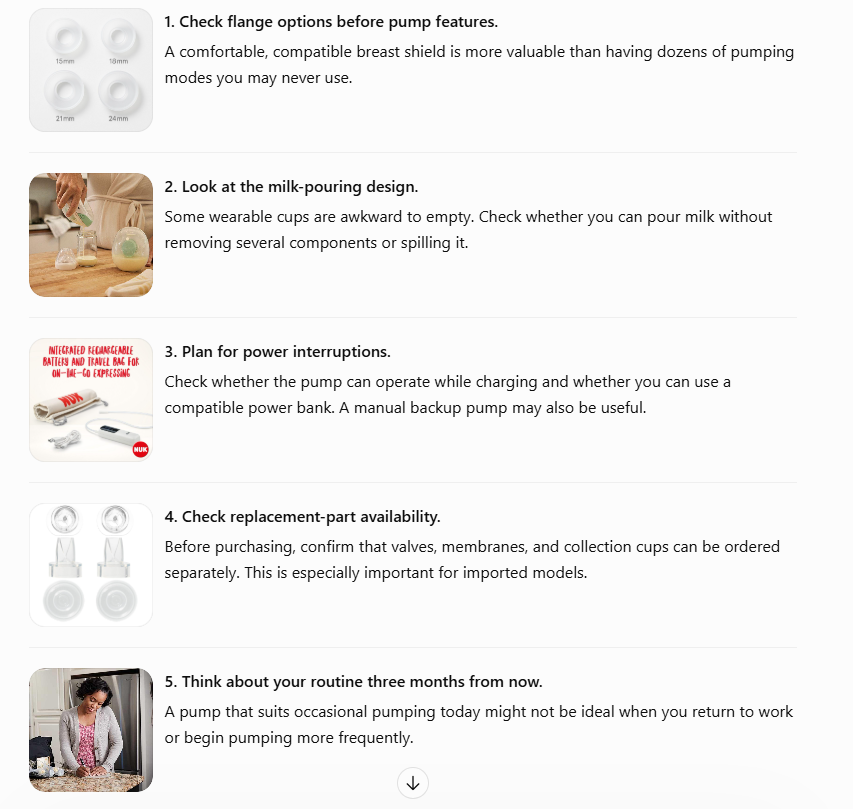
11. Five Less-Obvious Tips Before Buying Either Pump
12. Can You Use Both a Wearable and Traditional Electric Pump?
Yes. Using both types can be practical.
For example, a mother may use a traditional double electric pump during planned sessions at home and a wearable pump when traveling or working.
This arrangement can offer flexibility without requiring the wearable pump to handle every session.
However, owning two pumps isn’t necessary for everyone.
If one properly fitted pump comfortably meets your needs, there may be no reason to purchase another.
13. Which Breast Pump Should You Choose? Real-Life Scenarios
| Your situation | What to prioritize |
|---|---|
| Pumping occasionally | Affordability, easy cleaning, comfort |
| Returning to office work | Portability, discretion, reliable milk removal |
| Exclusively pumping | Consistent performance, comfort, replacement parts |
| Pumping while caring for other children | Hands-free convenience and secure fit |
| Experiencing low milk output | Professional feeding assessment and effective milk removal |
| Traveling frequently | Battery life, size, cleaning access |
| Limited budget | Total ownership cost and flange compatibility |
The FDA recommends choosing a breast pump based on how you plan to use it, how much time you have, portability, and breast-shield fit. It also recommends seeking help from a qualified healthcare professional when choosing a suitable pump is difficult. FDA
14. Frequently Asked Questions
Are wearable breast pumps as good as electric breast pumps?
Wearable pumps are electric pumps themselves. Some work just as effectively as traditional models for certain users, while others may provide less consistent milk removal. Fit and individual response are important.
Do wearable breast pumps decrease milk supply?
Not automatically. However, if a pump consistently removes less milk and milk removal becomes insufficient, supply may be affected over time. Seek lactation support if you notice a sustained change.
Can I use a wearable breast pump every day?
Yes, provided the pump is suitable for your needs, comfortable, correctly fitted, and effective at removing milk. Follow its instructions for cleaning, maintenance, and use.
Are wearable breast pumps painful?
They shouldn’t cause persistent pain. Discomfort may indicate incorrect flange sizing, poor alignment, excessive suction, or another issue requiring attention.
Is a hospital-grade pump better than a wearable pump?
Not necessarily for every mother. The term hospital-grade is not a guarantee of better results for everyone. Certain multi-user or hospital-use pumps may be recommended for specific clinical circumstances. Your healthcare team can help determine whether one is appropriate.
Can I sleep while using a wearable breast pump?
Do not assume a wearable pump is designed for use while sleeping. Follow the manufacturer’s instructions, remain attentive to the session, and avoid situations where the pump could shift or operate unattended.
Can I share my breast pump with another mother?
Do not share a pump intended for single-user use. If using a pump designed for multiple users, follow the manufacturer’s instructions and use the appropriate personal collection kit.
Final Verdict: Wearable vs Electric Breast Pump
A wearable breast pump may be a good choice if you value mobility, flexible pumping sessions, and a compact design.
A traditional electric breast pump may be preferable if you want a more stationary setup, easily available replacement parts, or a wider choice of breast shields and accessories.
But the most important consideration is not whether a pump is wearable or traditional.
The best breast pump is the one that removes milk effectively, fits comfortably, suits your routine, and can be maintained safely.
Rather than choosing based on popularity or price alone, consider how often you plan to pump, where you’ll use it, and whether the pump can support your changing needs.
A thoughtful choice today can save you money, time, and unnecessary frustration later.
Trusted references
This guide uses recommendations from established public health and medical-device authorities:
- FDA — Choosing a Breast Pump
- CDC — How to Clean and Sanitize Breast Pumps
- FDA — Cleaning a Breast Pump
Editorial note: This article provides general educational information and does not replace individualized medical or lactation advice. Product comparisons are based on design characteristics and published guidance, not claims of personal hands-on testing.