13 min readUpdated October 30, 2026
What this guide covers
- 1. Wearable vs Electric Breast Pump: Quick Comparison
- 2. What Is a Wearable Breast Pump?
- 3. What Is a Traditional Electric Breast Pump?
- 4. Which Pump Removes More Milk?
- 5. Are Wearable Pumps Good for Exclusive Pumping?
- 6. Wearable vs Electric Breast Pump for Working Moms
- 7. Comfort: Which Pump Feels Better?
- 8. Seven Common Breast Pump Buying Mistakes
- 9. Which Breast Pump Is Easier to Clean?
- 10. The Hidden Cost of a Breast Pump: Calculate the Whole Year
- 11. Five Less-Obvious Tips Before Buying Either Pump
- 12. Can You Use Both a Wearable and Traditional Electric Pump?
- 13. Which Breast Pump Should You Choose? Real-Life Scenarios
- 14. Frequently Asked Questions
- Final Verdict: Wearable vs Electric Breast Pump
- Trusted references
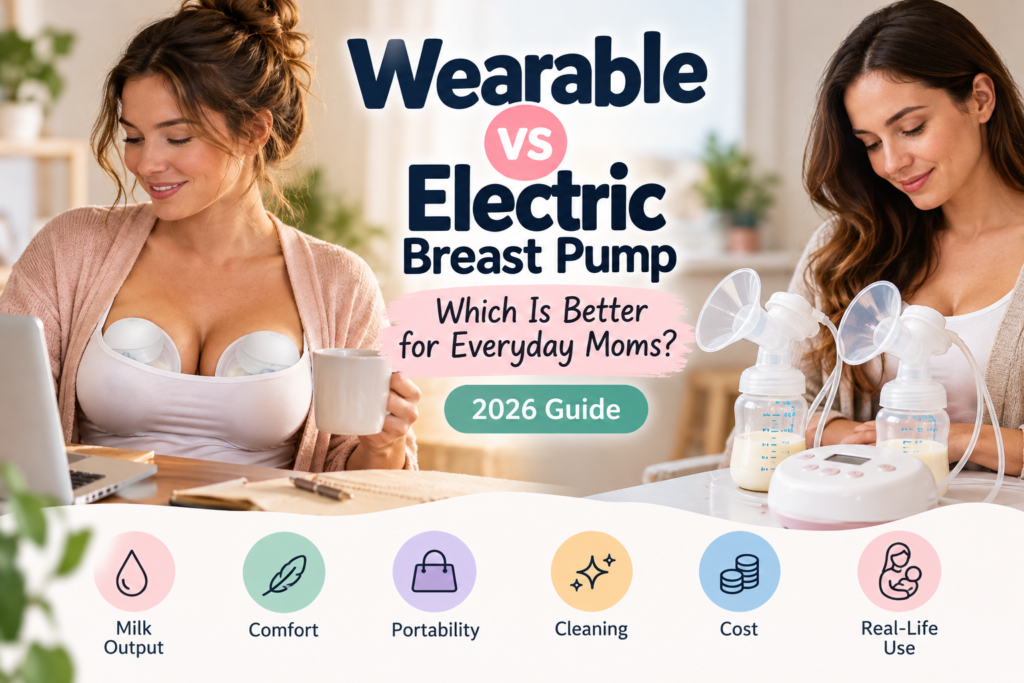
Choosing a breast pump sounds simple until you start comparing different types. One pump fits inside your bra and lets you move around. Another has tubes, a motor, and collection bottles, but may offer more control over pumping sessions.
So, which one should you choose?
If you’ve been searching for wearable vs electric breast pump, you’re probably wondering about more than convenience. You want to know which pump removes milk effectively, which feels more comfortable, whether wearable pumps are suitable for exclusive pumping, and whether an expensive pump is actually worth buying.
Here’s something many buying guides don’t explain clearly: wearable breast pumps are also electric breast pumps. The real comparison is usually between a wearable, in-bra electric pump and a traditional electric pump with an external motor.
Neither design is automatically better for every mother. Your milk supply, pumping frequency, breast and nipple fit, daily routine, and budget all matter.
This guide explains the practical differences, the problems parents often discover after buying a pump, and some less-obvious tips that can help you make a more confident decision.
1. Wearable vs Electric Breast Pump: Quick Comparison
| Feature | Wearable breast pump | Traditional electric breast pump |
|---|---|---|
| Design | Fits inside a pumping bra | External motor with collection kit |
| Portability | Usually very portable | Depends on model |
| Hands-free use | Usually yes | Possible with a pumping bra |
| Suction adjustment | Varies by model | Often offers multiple settings |
| Milk removal | Depends on fit and response | Depends on fit and response |
| Cleaning | Multiple small components | Flanges, valves, bottles, tubing as applicable |
| Noise | Varies; not always silent | Varies by model |
| Best suited for | Mobility and flexible routines | Regular pumping and greater setup flexibility |
| Main limitation | Positioning, capacity, and fit can be challenging | Less discreet and sometimes less portable |
Important: A wearable pump is not necessarily weaker, and a traditional pump is not guaranteed to remove more milk. Individual fit and performance matter more than the product category alone.
2. What Is a Wearable Breast Pump?
A wearable breast pump is a compact pumping system designed to sit inside a supportive bra. Most models combine a motor, breast shield, and milk collection container into a relatively small unit.
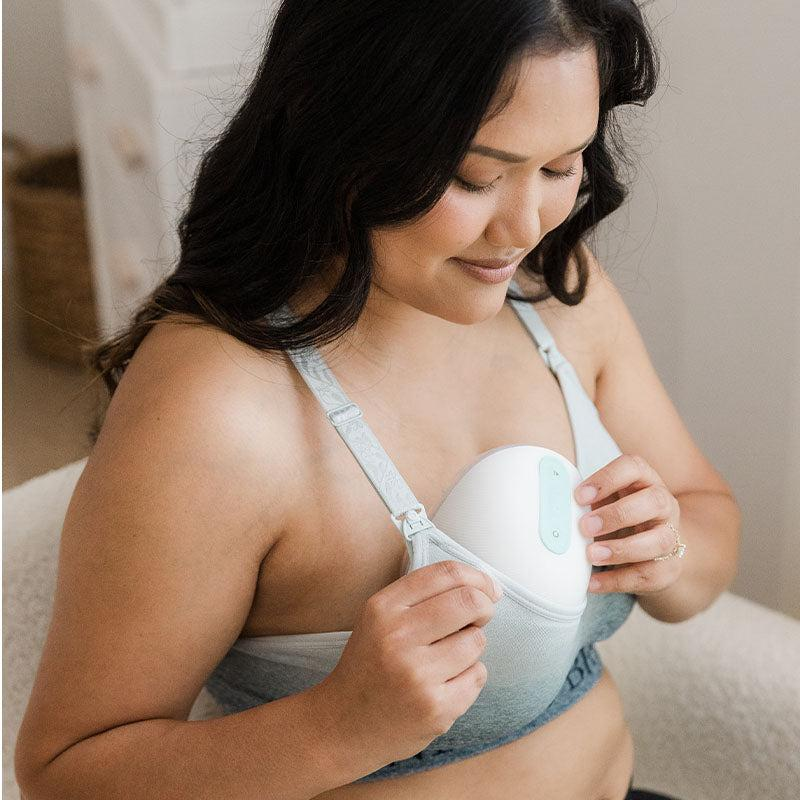
Some wearable systems have a separate motor connected to in-bra collection cups. Others are fully self-contained.
10 Tips for Using Your Wearable Breast Pump – Kindred Bravely
S1 Plus Rechargeable Pump Bundle – Tote & Pink Cooler
How to Pump on the Go with a Wearable Breast Pump
Why mothers choose wearable pumps
The biggest advantage is flexibility. You may be able to pump while sitting at your desk, preparing a simple meal, or doing light activities around the house.
This can be especially helpful for mothers who find it difficult to sit beside a conventional pump several times a day.
However, wearable doesn’t mean completely unrestricted movement.
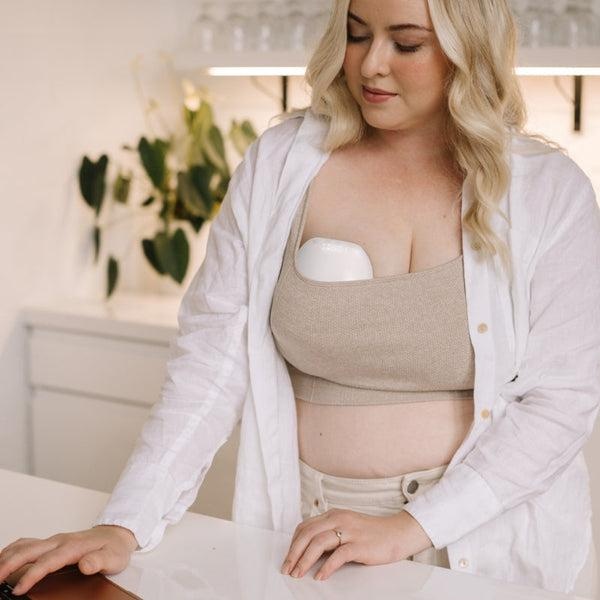
Bending forward, lifting heavy objects, or changing position suddenly can affect cup alignment or cause leakage with some designs. Follow the manufacturer’s guidance about movement and positioning.
A practical tip most comparisons overlook
Before buying a wearable pump, consider your everyday clothing.
Some wearable cups create a noticeable shape under fitted clothes. A pump advertised as discreet may still be visible under a thin shirt.
If privacy matters at work, look at the cup’s actual dimensions, not just marketing photographs.
3. What Is a Traditional Electric Breast Pump?
A traditional electric breast pump uses a powered motor to create suction through a breast shield, also called a flange.
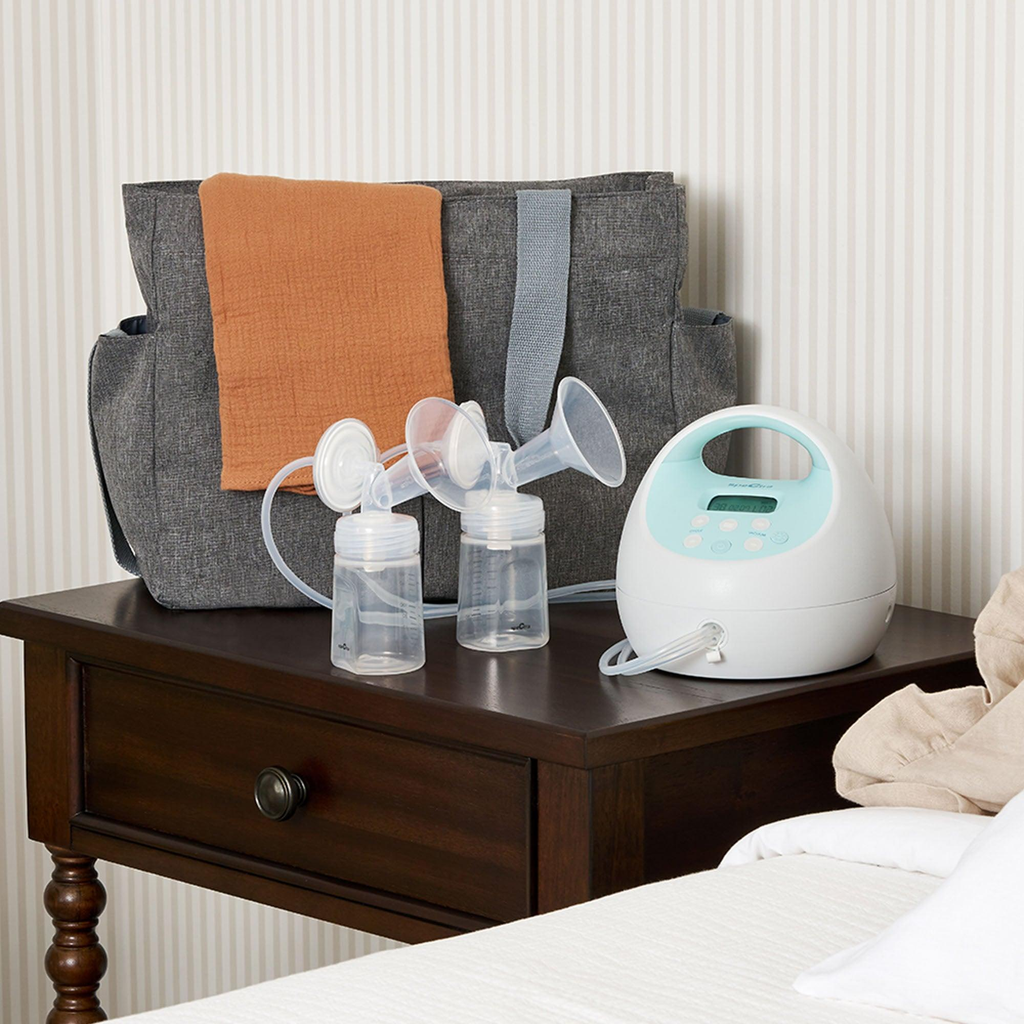
Milk is collected in a bottle or compatible container. Depending on the design, the motor may be plugged into an outlet or powered by a rechargeable battery.
Traditional electric pumps come in single and double-pumping versions.
A double electric pump allows milk expression from both breasts at the same time. This may save time compared with pumping each breast separately.
Why traditional pumps remain popular
Many models offer:
- Adjustable suction and pumping rhythms.
- Multiple flange sizes or compatible inserts.
- Replacement parts that are relatively easy to find.
- Compatibility with pumping bras for hands-free use.
- A stable setup for repeated daily sessions.
Some mothers find that a traditional electric pump provides more consistent milk removal than their wearable model. Others get comparable results from both.
The difference often comes down to fit, pump design, and individual milk ejection response.
4. Which Pump Removes More Milk?
This is probably the most important question, particularly if you plan to pump several times every day.
There is no universal winner.
A pump’s advertised suction strength does not tell you how much milk it will remove from your breasts.
Milk expression depends on several factors:
Flange fit: A flange that is too large or too small may cause discomfort and interfere with effective pumping.
Milk ejection reflex: Some mothers respond better to one pumping pattern than another.
Pump settings: The highest suction setting is not necessarily the most effective or comfortable.
Pumping frequency: Milk production is strongly influenced by how frequently and effectively milk is removed.
Pump condition: Worn valves, damaged membranes, and poor seals can reduce performance.
Unique tip: Compare pumping patterns, not just bottle volumes
If you’re testing two pumps, don’t judge them using only one session.
Milk output can change throughout the day and from one session to another.
Instead, compare each pump over several similar sessions while keeping timing, feeding circumstances, and session length reasonably consistent.
Record comfort, leakage, how well the breast softens, and the amount collected.
Remember that pumped volume alone is not a reliable measurement of your total milk supply.
If you’re concerned about milk production or your baby’s intake, a lactation professional can help assess feeding and milk transfer.
5. Are Wearable Pumps Good for Exclusive Pumping?
Exclusive pumping means expressing breast milk to feed your baby rather than relying on direct breastfeeding.
For exclusive pumpers, reliability and comfort become especially important because pumping is part of the daily feeding routine.
A wearable pump can be useful, but there are a few questions worth asking before making it your only pump.
Can you maintain your usual milk removal?
If your wearable consistently removes less milk than another properly fitted pump, that may matter when you depend on pumping to maintain your supply.
Can you replace the parts easily?
Frequent pumping places more wear on valves, membranes, and other components.
A pump that works well but has difficult-to-find replacement parts may become inconvenient over time.
Is the pump comfortable during repeated sessions?
A pump that feels comfortable for occasional use may feel different when used multiple times a day.
A more flexible option
Some exclusive pumpers prefer using a traditional double electric pump for their main sessions and a wearable pump when they need mobility.
This isn’t a requirement, and many mothers successfully use wearable pumps as their primary pumps. The best approach depends on whether the pump works effectively for you.
If you are establishing supply, experiencing low output, or pumping for a premature or medically vulnerable baby, seek individualized guidance from your healthcare team before relying on a new pump.
6. Wearable vs Electric Breast Pump for Working Moms
Returning to work can change your pumping priorities.
At home, you might have time to prepare your equipment and sit comfortably. At work, you may need to manage meetings, privacy, milk storage, and cleaning.
A wearable pump can make certain parts of this routine easier, especially if you have limited space.
But convenience is only one part of the decision.
Consider your actual work environment
If you work at a desk, a wearable pump may be convenient, provided you can position it properly and store expressed milk safely.
If your job involves frequent bending, lifting, or physical activity, a wearable cup may shift or leak.
If you have a private pumping space and predictable breaks, a traditional electric pump may be just as practical.
Less-obvious tip: Check how easily you can pour milk out of the wearable collection cup. Some designs have narrow openings or awkward pouring angles. Spilling even a small amount can be frustrating, especially when every ounce matters to you.
Also, check the battery life. A pump that lasts for several sessions on paper may still need charging during a long workday, depending on your settings and usage.
7. Comfort: Which Pump Feels Better?
Comfort depends on more than whether a pump is wearable.
A traditional pump with a correctly fitted flange can be more comfortable than a poorly fitted wearable pump. The reverse can also be true.
Pumping should not cause persistent pain, nipple injury, or significant swelling.
Check these signs of poor fit
- Your nipple rubs painfully against the flange tunnel.
- Excessive areola tissue is pulled into the tunnel.
- You experience pinching or persistent discomfort.
- Your nipple becomes swollen, damaged, or discolored.
- Milk expression seems less effective than usual.
Nipple size can change during pregnancy and postpartum, so a flange size that worked previously may not remain ideal.
Unique tip: Measure for the actual pump you’re using
Do not assume that a flange insert fitting one pump will work equally well in another.
Different breast shield shapes, tunnel lengths, materials, and pumping mechanics can affect comfort.
Use the manufacturer’s fitting instructions and seek professional help if you’re unsure.
Increasing suction to compensate for a poor fit is not a good solution.
8. Seven Common Breast Pump Buying Mistakes
Mistake 1: Choosing the highest advertised suction
Stronger suction doesn’t automatically mean better milk removal. Comfort and effective milk expression are more important than the maximum suction number.
Mistake 2: Assuming every wearable pump is quiet
Some models make audible motor sounds, especially in quiet rooms. Check independent demonstrations rather than relying only on advertising.
Mistake 3: Ignoring replacement-part costs
The purchase price is only one expense. Valves, membranes, flanges, inserts, and collection cups may need replacement according to manufacturer instructions or when worn.
Mistake 4: Overlooking collection capacity
If you usually express larger amounts of milk, a small collection cup may need emptying during a session.
Check the usable capacity and fill indicators, not simply the advertised maximum.
Mistake 5: Buying without checking cleaning requirements
Wearable pumps can have small seals and narrow spaces that require careful cleaning. Compare the number of parts that contact milk and how easily they can be disassembled.
Mistake 6: Assuming hands-free means you can do everything
Some movements can disturb cup alignment. Even with a wearable pump, you may need to limit activity.
Mistake 7: Buying based only on social media reviews
A pump that works beautifully for one mother may be uncomfortable or ineffective for another.
Look for reviews that discuss fit, cleaning, replacement parts, long-term reliability, and customer support—not just how the pump looks.
9. Which Breast Pump Is Easier to Clean?
Cleaning is one of the most overlooked differences between wearable and traditional electric pumps.
A wearable pump may appear simpler because it has no external tubing, but some designs contain several small components, including silicone seals, valves, collection cups, and breast shields.
A traditional pump may have larger components that are easier to reach with a cleaning brush, although the number of parts varies.
What the CDC recommends
The CDC recommends thoroughly cleaning pump parts that contact breast milk after every use. Daily sanitizing provides extra protection and is particularly important for babies younger than two months, babies born prematurely, or those with weakened immune systems. CDC
Here is a practical routine:
- Wash your hands before handling pump equipment.
- Disassemble all milk-contact parts after pumping.
- Rinse and wash the parts according to the manufacturer’s instructions.
- Allow everything to air-dry thoroughly in a clean area.
- Store completely dry parts in a protected place.
Important tip: Do not assume that storing used pump parts in the refrigerator between sessions makes them safe to reuse without washing. Refrigeration slows bacterial growth but does not stop it, and the CDC notes that this practice has not been established as a safe replacement for thorough cleaning. CDC
If you pump frequently at work, an extra clean collection kit may be more useful than a pump with an elaborate smartphone app.
10. The Hidden Cost of a Breast Pump: Calculate the Whole Year
A breast pump is not always a one-time purchase.
Imagine two hypothetical pumps:
| Expense | Wearable pump | Traditional electric |
|---|---|---|
| Initial purchase | $180 | $140 |
| Replacement parts | $60 | $40 |
| Extra collection accessories | $35 | $20 |
| Estimated first-year total | $275 | $200 |
These are illustrative amounts, not current product prices or universal replacement schedules.
A less expensive pump could ultimately cost more if its replacement parts are expensive, difficult to find, or need frequent replacement.
A smarter way to compare value
Calculate the approximate cost per pumping session.
For example, a pump costing $240 in total over a year and used 600 times has an equipment cost of approximately $0.40 per session.
This doesn’t include electricity, cleaning supplies, or your time, but it offers a more useful comparison than purchase price alone.
Also, check your health insurance coverage, rental options, warranty, and whether the manufacturer sells replacement components separately.
11. Five Less-Obvious Tips Before Buying Either Pump
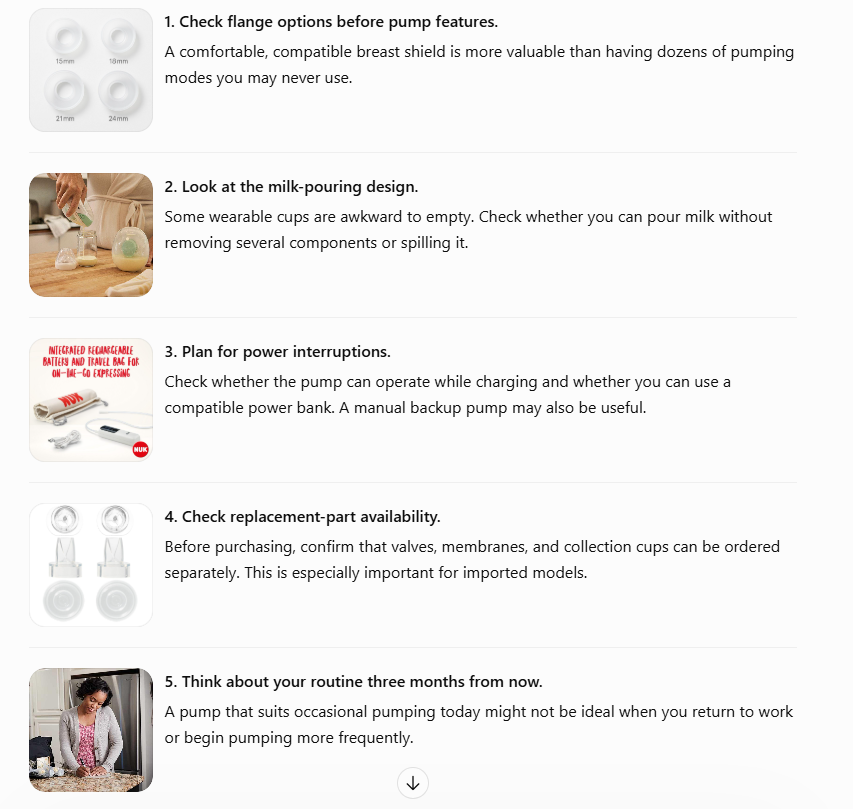
12. Can You Use Both a Wearable and Traditional Electric Pump?
Yes. Using both types can be practical.
For example, a mother may use a traditional double electric pump during planned sessions at home and a wearable pump when traveling or working.
This arrangement can offer flexibility without requiring the wearable pump to handle every session.
However, owning two pumps isn’t necessary for everyone.
If one properly fitted pump comfortably meets your needs, there may be no reason to purchase another.
13. Which Breast Pump Should You Choose? Real-Life Scenarios
| Your situation | What to prioritize |
|---|---|
| Pumping occasionally | Affordability, easy cleaning, comfort |
| Returning to office work | Portability, discretion, reliable milk removal |
| Exclusively pumping | Consistent performance, comfort, replacement parts |
| Pumping while caring for other children | Hands-free convenience and secure fit |
| Experiencing low milk output | Professional feeding assessment and effective milk removal |
| Traveling frequently | Battery life, size, cleaning access |
| Limited budget | Total ownership cost and flange compatibility |
The FDA recommends choosing a breast pump based on how you plan to use it, how much time you have, portability, and breast-shield fit. It also recommends seeking help from a qualified healthcare professional when choosing a suitable pump is difficult. FDA
14. Frequently Asked Questions
Are wearable breast pumps as good as electric breast pumps?
Wearable pumps are electric pumps themselves. Some work just as effectively as traditional models for certain users, while others may provide less consistent milk removal. Fit and individual response are important.
Do wearable breast pumps decrease milk supply?
Not automatically. However, if a pump consistently removes less milk and milk removal becomes insufficient, supply may be affected over time. Seek lactation support if you notice a sustained change.
Can I use a wearable breast pump every day?
Yes, provided the pump is suitable for your needs, comfortable, correctly fitted, and effective at removing milk. Follow its instructions for cleaning, maintenance, and use.
Are wearable breast pumps painful?
They shouldn’t cause persistent pain. Discomfort may indicate incorrect flange sizing, poor alignment, excessive suction, or another issue requiring attention.
Is a hospital-grade pump better than a wearable pump?
Not necessarily for every mother. The term hospital-grade is not a guarantee of better results for everyone. Certain multi-user or hospital-use pumps may be recommended for specific clinical circumstances. Your healthcare team can help determine whether one is appropriate.
Can I sleep while using a wearable breast pump?
Do not assume a wearable pump is designed for use while sleeping. Follow the manufacturer’s instructions, remain attentive to the session, and avoid situations where the pump could shift or operate unattended.
Can I share my breast pump with another mother?
Do not share a pump intended for single-user use. If using a pump designed for multiple users, follow the manufacturer’s instructions and use the appropriate personal collection kit.
Final Verdict: Wearable vs Electric Breast Pump
A wearable breast pump may be a good choice if you value mobility, flexible pumping sessions, and a compact design.
A traditional electric breast pump may be preferable if you want a more stationary setup, easily available replacement parts, or a wider choice of breast shields and accessories.
But the most important consideration is not whether a pump is wearable or traditional.
The best breast pump is the one that removes milk effectively, fits comfortably, suits your routine, and can be maintained safely.
Rather than choosing based on popularity or price alone, consider how often you plan to pump, where you’ll use it, and whether the pump can support your changing needs.
A thoughtful choice today can save you money, time, and unnecessary frustration later.
Trusted references
This guide uses recommendations from established public health and medical-device authorities:
- FDA — Choosing a Breast Pump
- CDC — How to Clean and Sanitize Breast Pumps
- FDA — Cleaning a Breast Pump
Editorial note: This article provides general educational information and does not replace individualized medical or lactation advice. Product comparisons are based on design characteristics and published guidance, not claims of personal hands-on testing.