
Introducing a baby to solid foods is an important milestone, and with it comes the question: When Can a Baby Sit in
a high chair? Parents want to make sure their child is safe, comfortable, and developmentally ready.
This guide explains the recommended age, signs of readiness, safety guidelines, pediatric advice, and practical tips for choosing and using a high chair. The goal is to give you the information you need to make a confident decision for your baby.
What Is a Baby High Chair?
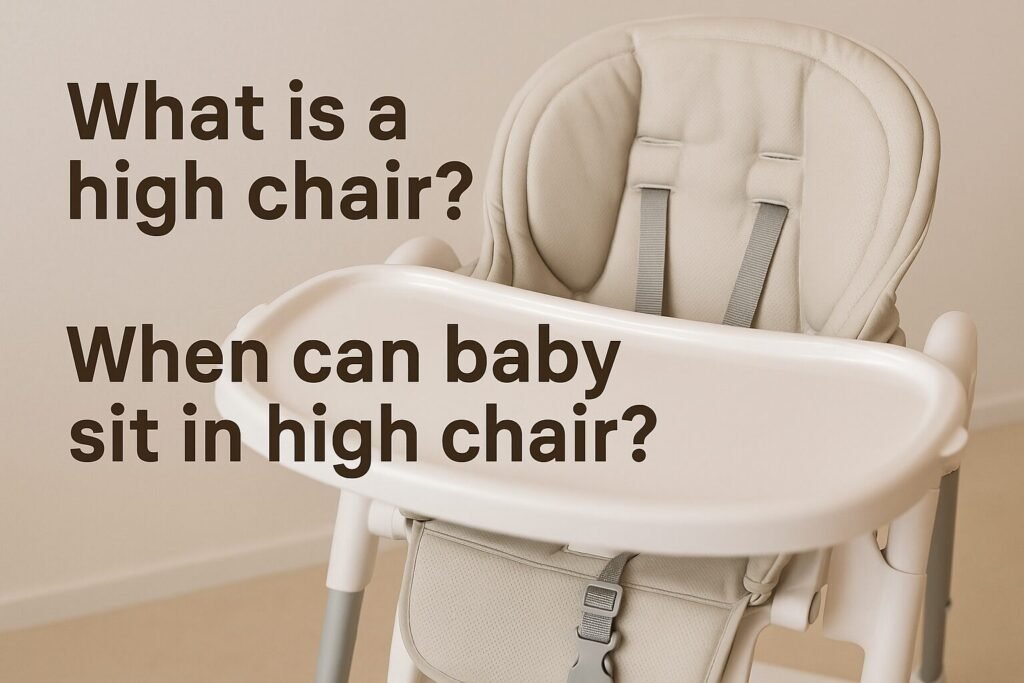
A baby high chair is a specially designed seat that allows infants and young children to sit upright at table height during feeding. Unlike regular chairs, it is built with safety and support in mind.
Introducing a baby to solid foods is an important milestone, and with it comes the question: When is the right time for a high chair? Parents want to make sure their child is safe, comfortable, and developmentally ready.
Key Features of a High Chair:
Elevated seat – brings the baby to table level for family meals.
Stable base – wide legs or a weighted frame to avoid tipping.
Safety harness – usually three-point or five-point straps to prevent falls.
Tray – detachable surface for food, which also keeps the baby secure.
Supportive design – upright backrest and sometimes a footrest for posture.
High chairs make feeding more practical for parents while also helping babies develop independence at mealtime. They are not play seats or loungers—their main purpose is safe feeding.

Why Is a High Chair Important for Baby Feeding?
A high chair is not just a convenience; it plays a role in safe feeding and healthy development.
1. Supports Proper Posture
Babies need to be upright when eating solids to reduce choking risks. A high chair ensures correct body alignment—hips, knees, and ankles at 90 degrees.
2. Encourages Independence
When seated in their own chair, babies begin to explore textures and practice self-feeding. This is especially helpful during baby-led weaning.
3. Makes Family Meals Easier
A high chair allows your baby to join the family at the dining table, helping them learn by watching others eat.
4. Provides a Safe Space for Feeding
With a harness and tray, a high chair keeps your baby secure, reducing accidents compared to feeding on a sofa, lap, or adult chair.
5. Simplifies Cleaning
Most high chairs have removable trays and wipeable surfaces, making post-meal clean-up faster for parents.
Best Age for High Chair Use
Most babies are ready to use a high chair at around six months old. This usually lines up with the start of solid foods. At this age:
- Babies can sit upright with minimal support
- Head and neck control are strong
- Interest in food becomes noticeable
Some babies may reach this stage slightly earlier or later. Age alone is not enough to decide. You need to look at developmental readiness.
Signs Your Baby Is Ready
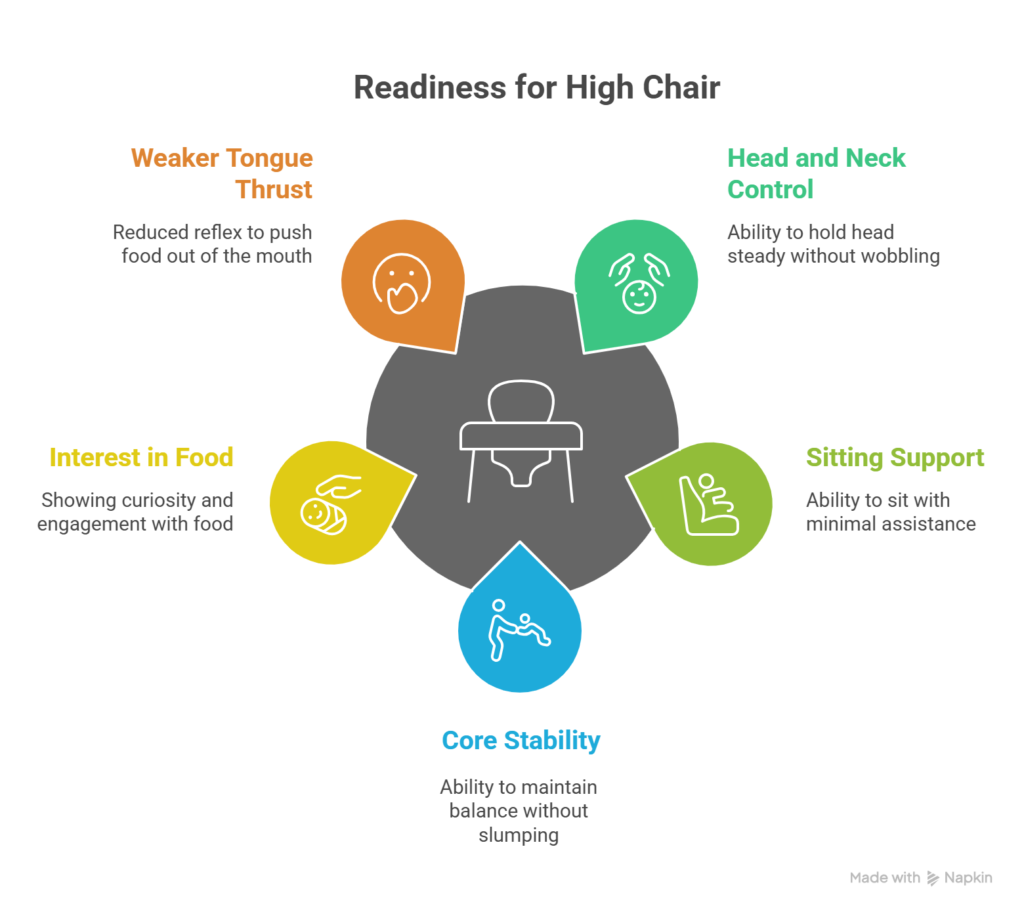
A baby is ready for the high chair when these milestones are clear:
- Stable head and neck control without wobbling
- Sitting with little support for short periods
- Core stability so they don’t slump to the side
- Interest in food by reaching, watching, or opening their mouth
- Weaker tongue thrust reflex, so food stays in the mouth instead of being pushed out
If most of these are in place, your baby can usually sit safely in a high chair.
High Chair Safety Guidelines
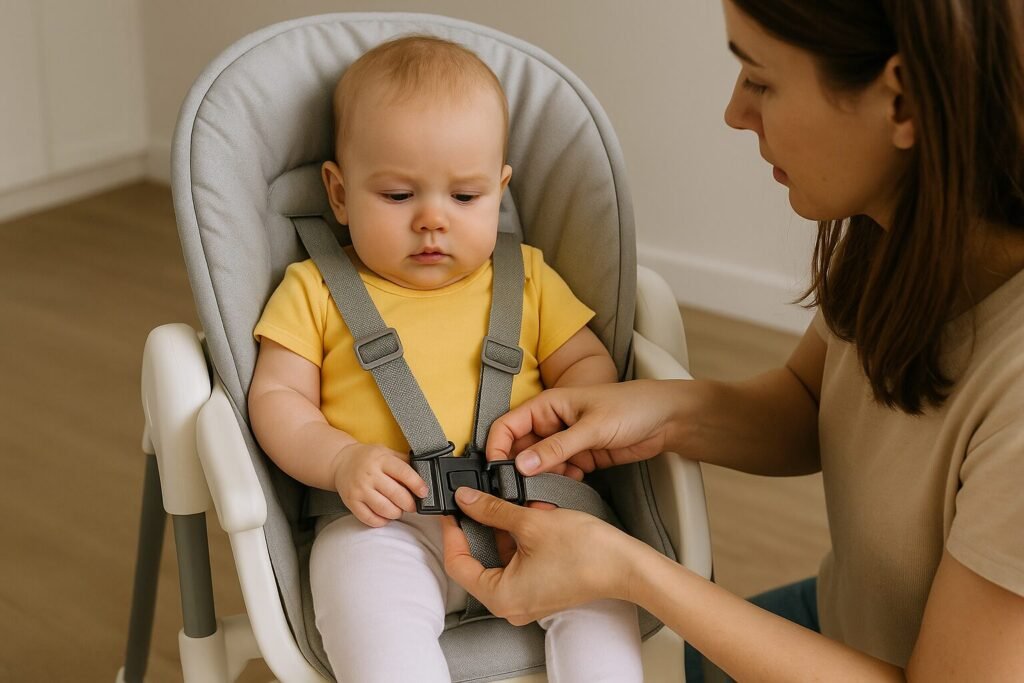
Safety is critical. Falls and poor posture are the main risks if a chair is used too early or without proper precautions. Follow these rules:
- Always use the safety harness. A five-point harness is best.
- Keep your baby upright, never reclined, during feeding.
- Place the high chair on a flat, stable surface.
- Position the chair away from counters or tables to prevent pushing off.
- Never leave your baby unattended in the high chair.
- Limit use to mealtimes only. Do not use it as a play seat.
Short, supervised sessions reduce risks and keep feeding positive.

Pediatric Recommendations
Pediatricians emphasize posture and timing. Their advice includes:
Wait until developmental readiness is clear, usually around six months.
Avoid reclined feeding in high chairs marketed for younger infants. Reclining increases the risk of choking.
Keep joints at 90-degree angles hips, knees, and ankles for safe swallowing and comfort.
Ask your pediatrician if your baby has developmental delays, was born prematurely, or if you are unsure about readiness.
Introducing the High Chair
The first experiences set the tone. Introduce the chair gradually:
- Start short – 5 to 10 minutes with toys before meals
- Build comfort – let your baby watch family mealtimes from the chair
- Introduce solids – begin with small spoonful or finger foods once posture is stable
- Stay positive – if the baby resists, try again later without pressure
Some parents start with purées, while others follow baby-led weaning. In both cases, the high chair provides a safe and upright space.
Alternatives Before Six Months
If your baby is not yet ready, avoid using a high chair. Safer options include:
- Your lap, with the baby upright and supported
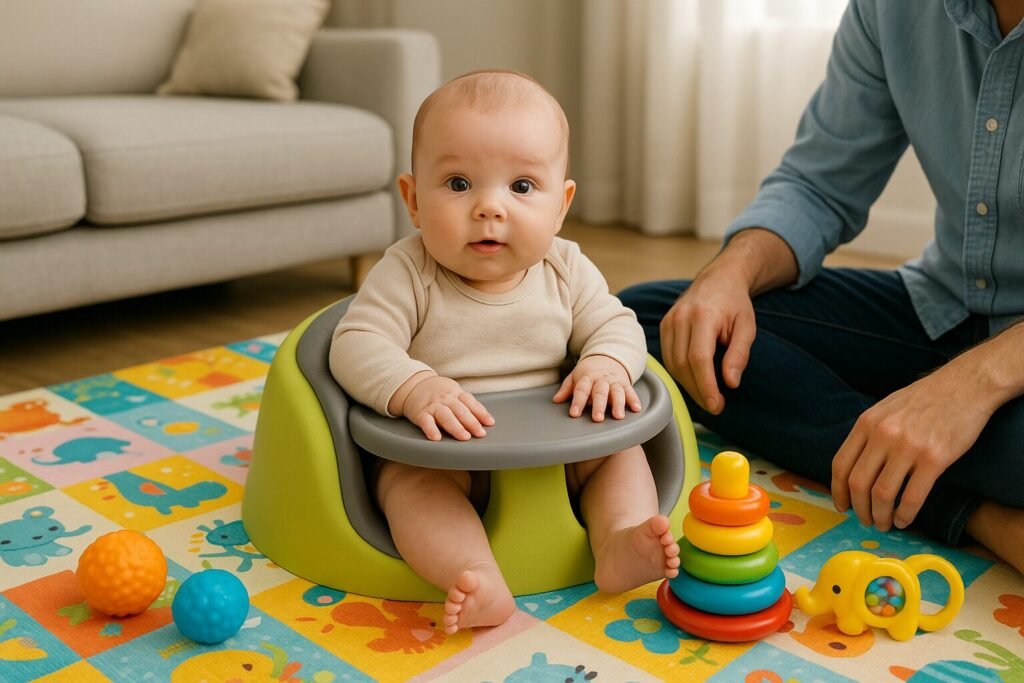
- Infant floor seats for short play sessions, not feeding solids
- Bouncers for rest or play, again not for feeding
- Specialized infant feeding chairs, only if approved by your pediatrician
Newborns should never use a high chair. Their muscles are not developed enough to support safe sitting.
Choosing the Right High Chair
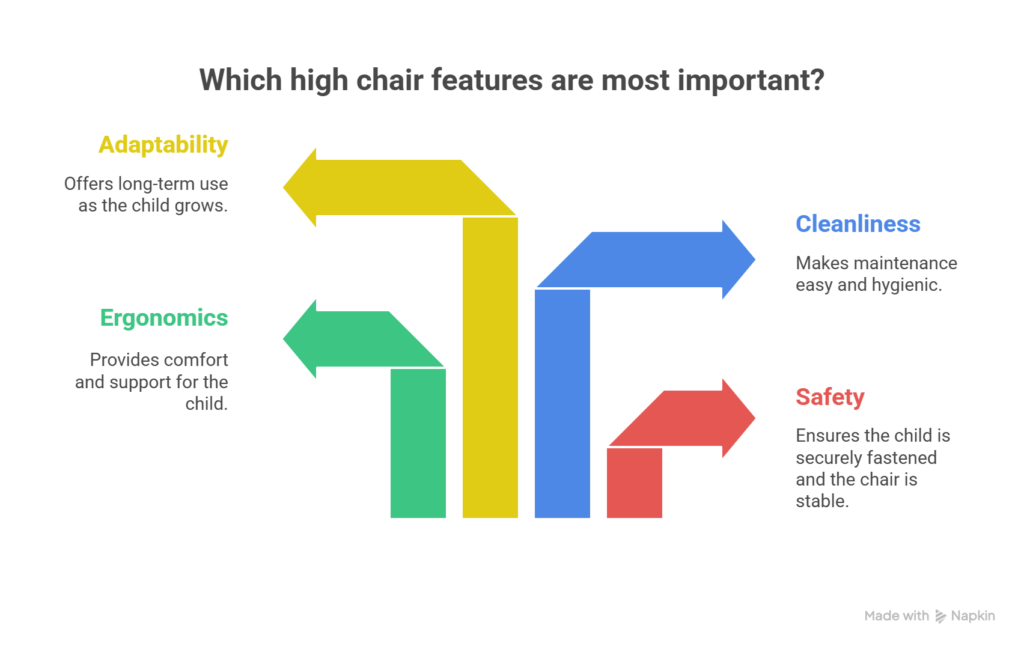
Not all high chairs are the same. Look for these features:
- Five-point harness for safety
- Stable frame that doesn’t tip easily
- Ergonomic support, ideally with an adjustable footrest
- Easy cleaning with removable trays and washable covers
- Adaptability, such as models that convert to toddler chairs
- Compact storage if you have limited space
A supportive, ergonomic design helps babies sit upright and focus on feeding.
Common Mistakes to Avoid
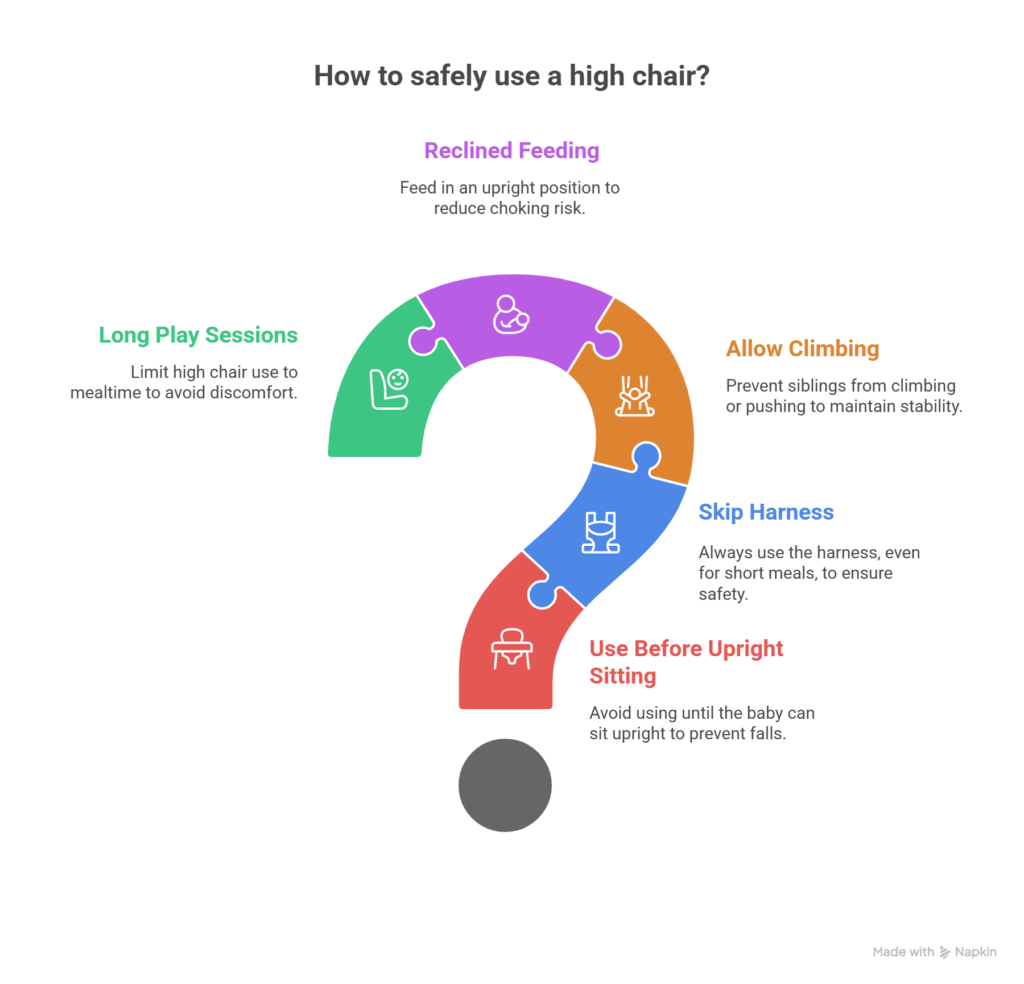
Parents sometimes rush or overlook safety. Avoid these errors:
- Using a high chair before your baby can sit upright
- Skipping the harness because “it’s just a short meal”
- Allowing siblings to climb or push the chair
- Feeding in a reclined or slouched position
- Letting the baby sit for long play sessions outside mealtime
Consistency with safety rules prevents accidents.
Final Thoughts
A high chair is an important tool for introducing solids and including your baby in family meals. The right time is usually around six months, but readiness matters more than age. Look for stable posture, good head control, and interest in food before starting.
Choose a safe, ergonomic high chair, use the harness every time, and keep sessions supervised and short. If you are unsure, consult your pediatrician for guidance.
By waiting for the right moment and using the chair correctly, you create a safe and positive feeding environment for your baby’s first meals.
Frequently Asked Questions
1. At what age can a baby sit in a high chair?
Most babies are ready around six months, once they can sit upright with good head and neck control.
2. Can I put my 4-month-old in a high chair?
No. At four months, most babies don’t have the muscle control needed. Wait until your baby shows clear readiness signs.
3. What are the signs my baby is ready for a high chair?
Key signs include stable head control, the ability to sit with little support, interest in food, and reduced tongue thrust reflex.
4. How long can a baby stay in a high chair?
Keep sessions short 10 to 20 minutes at first limited to mealtimes. High chairs should not be used as play seats.
5. Do babies need their feet supported in a high chair?
Yes. A footrest helps with posture, comfort, and safe swallowing. It also reduces fidgeting during meals.
6. Are reclining high chairs safe for feeding?
No. Reclined positions increase the risk of choking. High chairs should only be used in an upright position for feeding.
7. What can I use before my baby is ready for a high chair?
Safer alternatives include feeding on your lap, infant floor seats for play, or pediatric-approved infant feeding chairs.