
High chairs make meals easier, but they also bring safety risks if not used correctly. Thousands of babies are treated for falls or accidents each year because of high chairs. The good news: most of these incidents are preventable with safe use and good habits.
This guide explains 10 key rules, plus extra tips, common hazards, and answers to questions parents often ask for high chair safety.
Choosing the Right High Chair for Your Home
Not every high chair works for every family. The right choice depends on your space, lifestyle, and cleaning routine.
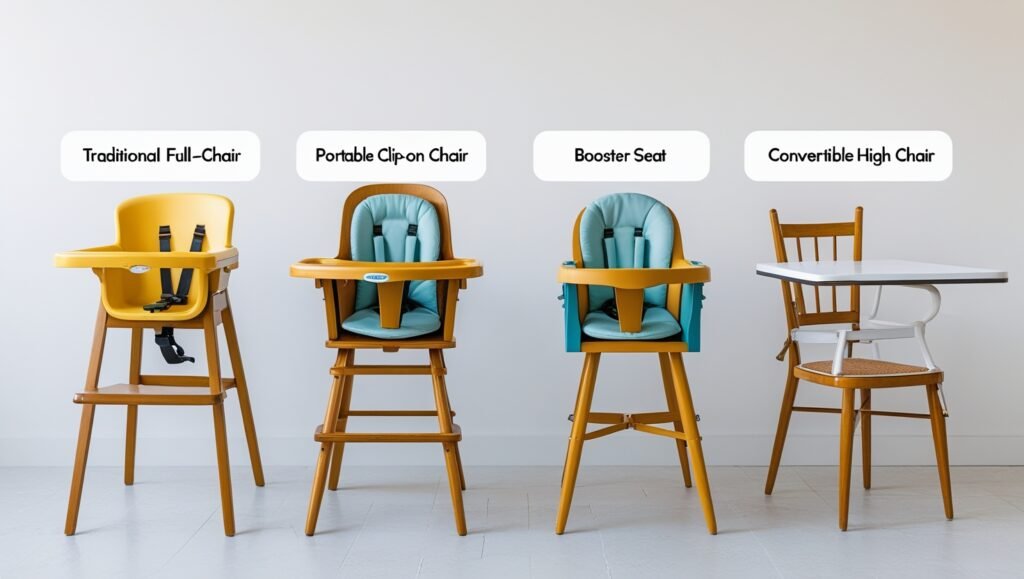
Types of high chairs to consider:
- Traditional full-size high chairs: Stable, often adjustable, and built for daily use.
- Portable clip-on chairs: Attach to sturdy tables; great for travel or small kitchens.
- Booster seats: Fit onto regular chairs, good for toddlers and small spaces.
- Convertible high chairs: Grow with your child, often turning into toddler seats or chairs.
Questions to ask before buying:
- Do I have the floor space for a large chair?
- Will I need to move it around often?
- Is it easy to clean after messy meals?
- Can my child grow into it, or will I need a new seat later?
Choosing the right model from the start reduces hassle and keeps mealtimes safer and smoother.

Wait Until Your Baby Is Ready
Not every baby is ready for a high chair at the same age. Most are ready between 6–7 months, when they can sit upright and hold their head steady. If your baby slouches or tips sideways, it’s too early.
Always Use the Harness
The five-point harness is your baby’s seatbelt. It stops them from sliding, standing, or climbing out. Never rely only on the tray. Buckle up before each meal.
Place the High Chair on a Stable Surface
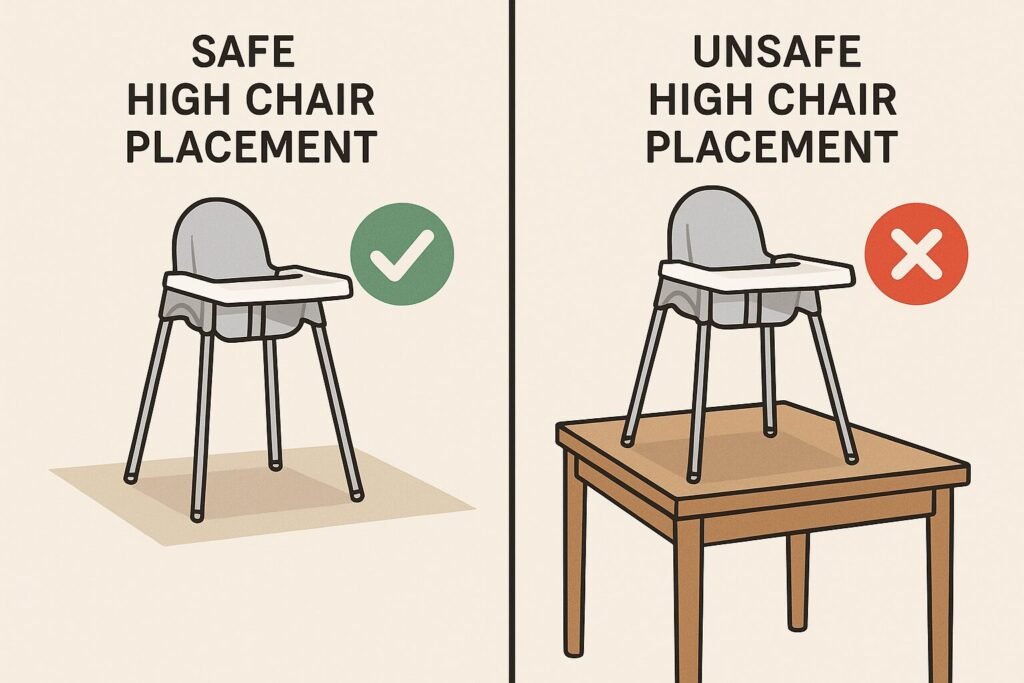
Always set the chair flat on the floor for safety. Never put it on a table, counter, or uneven ground. Keep it away from walls or counters your baby could push against.
Lock the Wheels if Your Chair Has Them
If your high chair rolls, lock the wheels before use. Avoid moving the chair with your baby inside.
Use the Tray Correctly — But Don’t Rely on It
Click the tray into place, but remember: it’s not a safety device. Babies can lean on it or knock it loose. The harness does the real job.

Supervise Every Mealtime
Never leave your baby unattended. Stay close and keep hot drinks, cords, and sharp items out of reach.
Position the High Chair Away From Hazards
For high chair safety keep the chair clear of:
- Tablecloths or placemats that can be pulled down
- Cords, blinds, or appliances
- Hot pans, mugs, or plates
Respect Weight and Age Limits
Check your high chair’s manual. Stop using it once your child exceeds the weight or height limit. Switch to a booster or toddler chair when needed.
Clean and Inspect Regularly
Wipe down after each meal. Wash straps weekly if removable. Inspect screws, joints, and straps often. Clean chairs last longer and stay safer.
Stay Informed About Recalls
Register your high chair with the brand. Check safety recall sites. If your model is recalled, repair or replace it right away.
Create a Safe Mealtime Routine
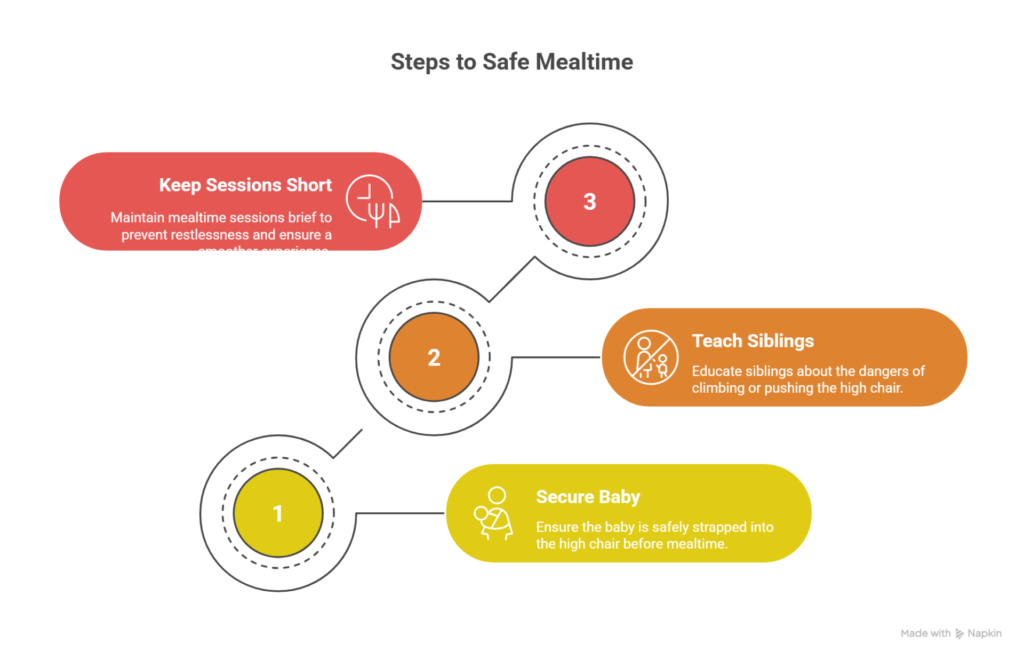
Safety is not just about the chair — it’s also about habits. Build a calm, consistent routine:
- Strap baby in before serving food.
- Teach siblings not to climb or push the chair.
- Keep feeding sessions short to prevent restlessness.
Good routines make mealtime smooth and safe for everyone.

Extra Safety Tips Parents Find Useful
- Don’t let older siblings push or climb on the chair
- Avoid toys with cords or straps near the high chair
- Keep mealtime calm to prevent sudden movements or frustration

Teaching Good Mealtime Habits in the High Chair
A high chair isn’t only about safety — it’s also about teaching structure and healthy habits. Babies who learn mealtime routines early often adapt better as they grow.
Tips for creating good habits:
- Keep mealtimes consistent: Serve food at regular times.
- Offer small portions: Too much food can overwhelm babies.
- Limit distractions: Skip screens and toys when eating.
- Encourage self-feeding: Allow babies to explore food with their hands or soft spoons.
- Model behavior: Eat together so your baby sees family mealtime as a shared activity.
When used consistently, the high chair becomes a signal that it’s time to eat, not play. This helps reduce fussiness and supports better eating habits later in childhood.
Final Takeaway
High chairs are safe when used with care. Follow these 12 rules: wait until your baby is ready, buckle the harness, supervise every meal, and keep the chair stable, clean, and clear of hazards.
A little consistency goes a long way. With safe habits, your baby’s high chair becomes not just a seat — but a secure place to enjoy food, bond with family, and build healthy eating routines.
Frequently Asked Questions (FAQs)
1. At what age can a baby sit in a high chair?
Most babies are ready around 6 months, but check for sitting balance and head control before starting.
2. Is it safe to use a high chair before 6 months?
No. Babies need strong posture to sit safely. Using a high chair too early can cause slumping or falls.
3. What type of harness is best?
A five-point harness is safest. It secures the shoulders, waist, and crotch, preventing sliding and climbing.
4. Can I use a booster seat instead of a high chair?
Yes, for older babies or toddlers who sit well. But for first feeding stages, a high chair offers more support.
5. How do I know when to stop using a high chair?
When your child outgrows the weight/height limit or starts climbing out, transition to a booster or regular chair.
6. How do I keep a high chair clean?
Wipe after every meal, deep clean weekly, and wash straps if removable. Avoid letting food sit and harden.
7. What should I do if my high chair is recalled?
Stop using it immediately. Contact the manufacturer for repair kits, refunds, or replacements.